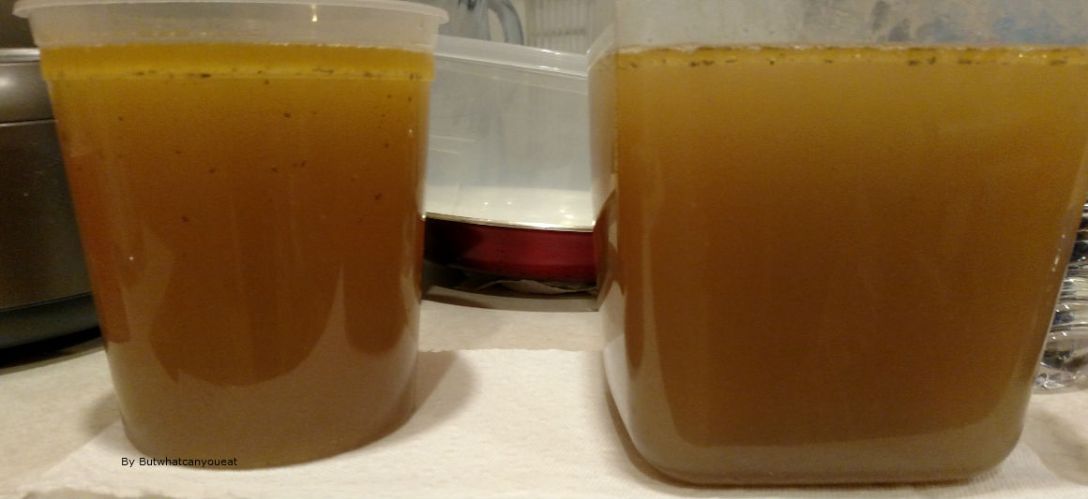
Sheltering in place? Self-isolating? Working from home like you always do? Or, my favorite floating around twitter, merely “exiled to your country estate for the good of the realm?” (No idea who started that, but I like it.) Make broth!
It’s what I’m doing anyway (in between laundry, sweeping, and writing!). If you’ve got time on your hands at home and you need something that is easily freezable, healthy, and soothing to the stomach, then now is the perfect time to start making broth. In our house, it’s usually chicken, since I always have bones and some vegetal odds and ends in the fridge.
I know there are fancier recipes out there, and it seems like everyone has their own personal broth recipe. It can get bewildering! Which one is best? Which one is the most healthy? I don’t really have the answer to that, but I can tell you what I think. To wit, the best broth is the easiest. It should meet your needs for taste and content, and it shouldn’t take a ton of your attention. You should be able to put it in a large pot, turn the heat to medium-low and forget about it for an hour or so.
My recipe for broth works for my family. I find it flavorful, nourishing, and really good for when I don’t feel well, or I need a quick meal. I generally make a huge amount and then freeze some, or use it up throughout the week. Please think of it as a starting recipe, and adjust for your or your family’s needs accordingly!
You’ll Need (Serves 4-8):
1-2 chicken carcasses (I know people who get whole chickens just for broth. I do not understand that, but it must be nice to have money. Just use leftovers!)
1 small knob of ginger, peeled, or 2 tsps. ground
2 tsps. lemongrass, or 1 handful of lemon thyme
3 cloves garlic
1/2 onion
1 tsp. sage
Salt and Pepper
2 stalks of celery
2 medium carrots
1 small handful of parsley (optional)
1 tsp olive oil
Stick all your ingredients into a large pot and let it heat on medium until you hear it begin to sizzle and a slight crust forms on the bottom of the pot. Add a little water and scrape up the crust. Fill the pot with water until it covers all your ingredients, and then let it come to a slight boil. Once it starts to bubble up, decrease the heat to medium-low or medium. You want the top to be bubbling, but not a fast or rolling boil. Leave it for one-two hours or until the water turns into a deep golden broth. I generally let the water boil down by half, because I want to make sure the collagen comes out of the bones and forms that healthy ‘jelly-like’ texture you see in bone broth.
Remove the pot from the heat and let it cool down, and then strain the ingredients out, and pour the broth into lidded tupperware or glass. Let it cool for about five minutes on the counter, and then sling it in the fridge. Basically, anything with a lid. If you want to freeze some, always remember to refrigerate first! Let it cool completely in the fridge to avoid bacterial growth once you start lowering the temperature.
Then, make soup, make rice with it, make a fantastically yummy sauce! We’re all stuck in our houses in the interests of our loved ones and our community. Take a moment to make yourself something nice, and if you have to go out, remember to take care of yourself!
Additional Comments:
- Lots of people tell you to sieve off the foam that appears when the bones are heated. I never do! It doesn’t matter, and I can’t be bothered. Removing it will make the broth more clear, but I honestly don’t see the point and can’t taste the difference. As a person allergic to eggs, clear broths are rather my nemesis, as a common way to get that clarity is with an egg white ‘float’ to catch all the stray proteins. Always ask if you’re not sure!
- I sometimes have this for breakfast either to jazz up leftovers (which is what I usually have for breakfast) or as a great way to make a smoother mashed root vegetable puree





 But What Can You Eat?