Soy-Free Ramen Noodle Soup

Do you know what I love watching? Shows with food. I don’t mean cooking shows (although I have my favorites!) I mean shows where food is somehow the centerpiece or an important backdrop to life. My best remembered TV episodes always featured something to do with food, like Mrs. Bridges’ Baron of Lamb on Upstairs, Downstairs when the king comes to visit, or the cake making scene in Sleeping Beauty, and who doesn’t remember Rey’s puffbread thing in Star Wars: The Force Awakens? Food is important to us in so many ways, and I’ve always been fascinated by it (I know you’re shocked. I mean, a food blog? About food??)

This is a very long winded-paragraph of me saying that one of the things I’ve always loved is ramen. Anyone remember the scene where they make ramen in Ponyo? Or, honestly, in any anime featuring high school students? And I think if we’re honest with ourselves, we all have our preferred brand of instant noodles: Nissan, Maruchan, Nongshim… There’s even a couple of museums!

When my allergies weren’t so bad, I could indulge in a steaming bowl of ramen from time to time, and add all manner of embellishments, but these days I have to be more careful. A lot of instant ramen brands rely on milk, egg, and soy, but also corn-derivatives to lengthen the shelf life of their products, as well as give it that wonderfully savory unctuousness of an hours long broth. Ramen restaurants, no matter how chic, usually use those same ingredients in their more natural state. Can’t blame them, it simply is what it is.

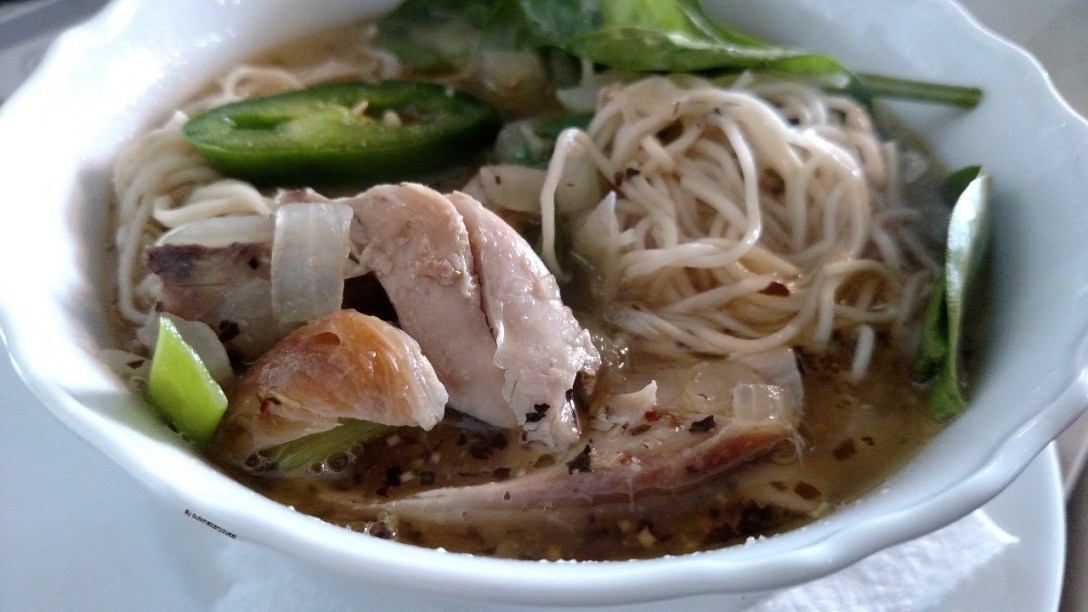
In order to give myself a treat, I came up with this lunch recipe to remind myself of those ramen noodle bowls of the past. I love the rich chicken broth simmered with chunks of chicken, the bite of ginger and garlic, and the slick, savory chew of the noodles. It’s a wonderfully filling bowl, perfect for lunchtime and easily paired up with any kind of topping you enjoy: jalapenos, spinach, cilantro, green onions, fried garlic and sesame oil, or red pepper flakes! The fun of lunch time (as opposed to dinner, when I at least am often too tried to really get into having all the options under the sun) is that you get a good lunch while at the same time having the energy to get creative. I hope you like it!

You’ll Need (serves 1, but is easily doubled):

1 – 1 1/2 cups chicken broth

1/4 tsp. fish sauce

1 garlic clove, grated

1/4 inch ginger, grated

1/2 tsp. red pepper flakes

1 tsp. salt

1/2 tsp. white pepper

1/2 tsp. black pepper

1/4 cup onions, chopped

2 tsps. olive oil

1 package of ramen noodles, or rice noodles

Toppings:

1 small handful cooked chicken, chopped

1 stalk green onion, diced

1 small handful spinach, cleaned and dried

1 half of a jalapeno, sliced

Grab a saucepan and heat the olive oil on medium. Add the onion, ginger, garlic, and all the spices. Once the onions have softened and turned a bit translucent, and you can smell the other ingredients, add in the chicken broth and fish sauce. Bring the mix to a light boil, and then add the noodles. Cook them through (usually takes about three minutes for gluten noodles and around a minute and a half for thin rice noodles) and then remove the noodles from the brother and put them in a bowl. A good slatted ladle works for me, but you could a fork or anything like that.

Add the chicken to the broth to warm it up, and then pour broth and meat over the noodles. Now, you get to go wild with the toppings! I liked cilantro, green onion, spinach, and jalapenos on the day I took the top picture, but you could also add red pepper or pickled vegetables if you have any that are safe for you to eat. I think this would also be wonderful with some fried garlic bits and sesame oil, or bok choy and some lemon juice!
Chicken Stir-Fry Lettuce Cups

Who else likes the idea of restaurants better than the execution? It’s always kind of struggle to sit politely, waiting for the service person to decide if they want to give you food or not. You can try to ameliorate the experience by emailing or phoning ahead, but that often adds a layer of social interaction it can be tough to add on, even though it’s necessary. So many people want to be helpful (and are!) but when you’re eating out with allergies, it can be exhausting to explain yourself time and time again.

I don’t honestly have an answer for that feeling, other than to say that one of the ways I try and get around it is through attempting to make my meals at home…not finicky, but a little more special sometimes. Even when it’s a simple dish, I feel like a meal should make you feel included rather than excluded. It’s what sharing food is all about!

When I lived in South Korea, one of the things I loved to do was go out for BBQ. It was so much fun to go out and cook a little meat and veggies, and wrap it in a shiso leaf or some romaine with a ton of gochujang (that’s a fermented hot pepper paste). Just sit around and stuff our faces and talk about our classes, and have a nice night out.

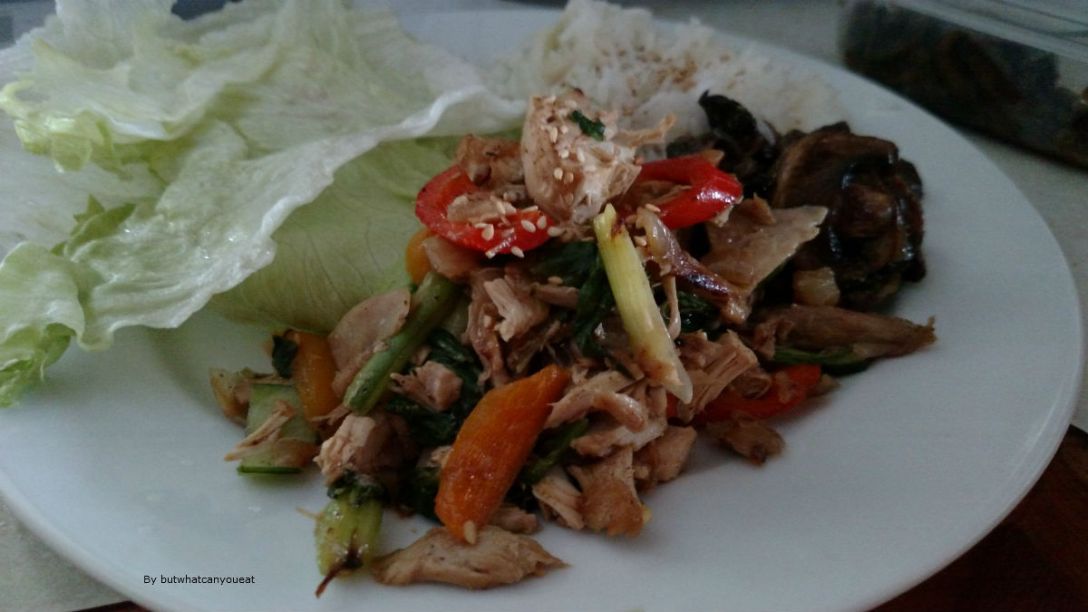
These days, I’m actually allergic to a lot of ingredients in basic Korea cooking (more’s the pity!), but sometimes I still try to capture the feel of it around the dinner table at home. My Chicken Stir-Fry Lettuce Cups are in no way traditional, and they’re really only vaguely in the culinary style of East Asia, but they are a meal meant to share. The red peppers are sweet and the chicken pieces are savory, and I love how warm and full it makes me feel. The process of wrapping the lettuce around my bites of food feels wonderfully interactive, and I like piling on red pepper flakes and white rice and sesame seeds to build the perfect cup.

You’ll need (serves 2 -4 ):

1 – 4 chicken thighs or chicken breasts, cut into chunks

1 red bell pepper, or 2 – 4 small mixed sweet peppers

3 green onions, chopped

1/2 onion, chopped

1/2 tsp ground ginger

1/4 tsp. cinnamon

1/2 tsp. cumin

1 tsp. white pepper

1 1/2 tsp red pepper flakes

Salt (to taste)

Black Pepper (to taste)

2 tbsp. olive oil

1/2 tsp. fish sauce

1 tsp mirin

Lime juice (to taste)

Sesame seeds (optional)

Big lettuce leaves, washed and torn into foldable sizes

First off, chop all your vegetables into chunks you can easily scoop up into lettuce. Then, cut all your chicken into chucks. Heat a wok or frying pan on medium with 1 tbsp. of olive oil, and add the chicken and half the amount of your spices. Make sure you at least season with salt, if you would rather cook all the spices in with the vegetables instead, because other wise the chicken will be bland.

Make sure to cook the chicken completely on both sides, and then set it aside while you cook the vegetables. There should be some great tasting-crust in the bottom of the pan, so add the rest of the olive oil (if necessary. You can definitively use less oil!) and the vegetables and get those pan drippings into your food! This is also where you toss in half or all of your spices, so that everything cooks together. When the onions have softened, add the chicken back in to the pan, and then add the fish sauce, mirin, and lime juice. Be careful with the fish sauce! Too much will overpower the meal and make the food taste a bit strange. The whole cooking process shouldn’t take more than thirty minutes.

Serve family style with white rice, the lettuce leaves, and a good pinch of sesame seeds. I also like a swirl of sesame seed oil right at the end, but it’s not necessary. If you can have hot mustard, sweet chili sauce, or chili oil, these make excellent toppings as well.

Additional Comments:

  • If you can use soy or coconut aminos as a soy-substitute, then add about 1 tsp. when you splash in the mirin, instead of the fish sauce.
  • If your meat is bone-in (as mine was) cook them whole and then set them aside and shred the meat before adding it back in. If you’re making this vegan, I recommend using a squash that doesn’t lose its shape, such as pumpkin or butternut squash!
  • Once again, if you’re having lettuce or any type of leafy green, make sure you know the farmer doesn’t use corn-based cleansers, fertilizers, or sprays in their agricultural cycle. These vegetables have a high water content and people with even simply a moderate corn allergy can be affected if ingested! (Oh the sore throats I have had!). Get them from a farmer’s market, or grow them yourself, but always use caution in the supermarkets, and remember: What works for one allergic person might not work for the next. Be cautious!

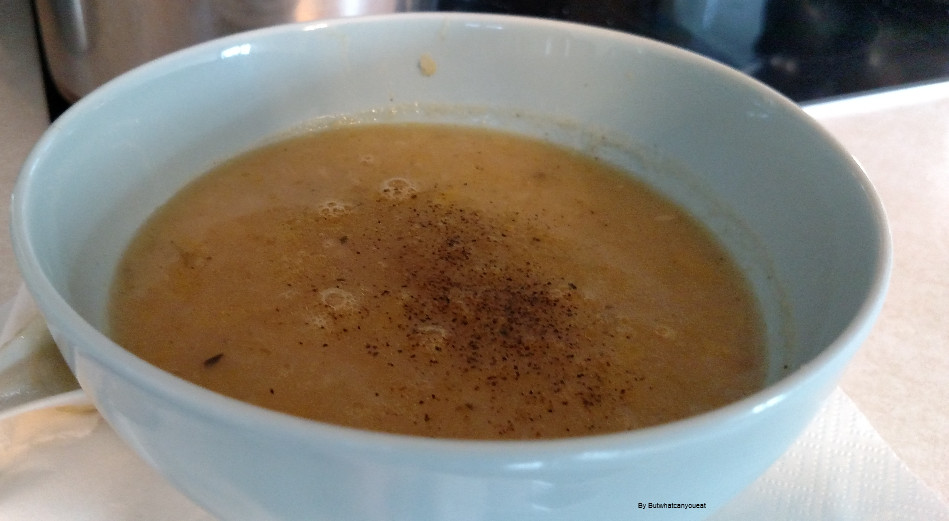
Peppery Potato and Leek Soup

Look, I love soup. I just do! I make a lot of broth, I spend a lot of time figuring out ways to use it, and if it’s not in a sauce, then it’s definitely going to show up in a soup later on. I can’t help it! It’s so easy and filling, and I don’t think it’s too much to say that, when you start staring into the cupboard, wondering what you can possibly make with what you have left…soup is going to be the answer almost every time.

This soup, when hot, is more of a winter/fall menu item, where you could maybe stretch into a particularly cold early spring. If served cold, I think it could be a passable Vichyssoise in the spring and summer months, though I confess it’s not my go-to summer dish (that would be strawberries and chicken salad). It’s very simply, requires nothing much from the pantry, and you can beef it up with anything from a good piece of toast to a pat of butter to a smattering of chopped green onion. I add more pepper, which possibly says something about me as a person.

You’ll Need (serves 2 – 4):

6 small potatoes or 4 large ones, peeled and chopped

1 – 2 large leeks, cleaned and chopped

1/4 cup onion, chopped

2 tsps white pepper

2 tsps black pepper

1 – 2 bay leaves

3 cloves roasted garlic

3 tsps salt

4 cups chicken broth

1 Tblsp olive oil

Get a large pot with a lid and heat the pot on medium-low with the olive oil. Add the leeks and onions, salt and peppers, and begin to wilt them, stirring occasionally. Once they begin to soften, add in the roasted garlic and smush them all together, stirring for two minutes until you can smell the garlic.

Add in the bay leaf, the potatoes, and the broth. Then, bring it to boil and simmer it with the lid covered for about twenty – thirty minutes. Check the potatoes occasionally by sticking them with a fork to see if they’re done. Once they’ve started to crumble, get a potato masher out, or a large spoon, and mash the potatoes in the broth. This makes the dish look creamy while still preserving a bit of texture, so that it’s not entirely smooth. Stir it up, remove the bay leaf, and serve!

Additional Comments:

  • A lot of traditional Leek and Potato soups add heavy cream or sour cream as an ingredient, to make a very luxurious, silken soup. I don’t honestly think it needs this, both because of my allergies and also because I don’t like just adding things like that to soups. I prefer them as personal add-ons, a dollop of non-dairy sour cream or yogurt here, a pat of butter there, so that you can enjoy this soup in the same way you might enjoy a baked potato.
    • If you do want to add dairy, or a non-dairy substitute, reduce the amount of broth by one cup and then add in the dairy close to the end of the cooking time.
  • If you like blended soups, take the pot off the hob and let it cool for a few minutes. Depending on the size of your blender, either carefully ladle the whole thing into the blender, or blend half the soup and then half again.
  • This can easily be made vegan by either substituting a vegetable broth or simply using water and upping the amount of spices/herbs and salt.

Quick Time Tomato Sauce

Got thirty minutes and some tomatoes burning a hole in your fridge? I have a sauce for that!

Now, I will be honest, this isn’t a fancy sauce. It’s straight up tomato sauce meant to clear space in the fridge and create a quick, hearty meal with maybe three or four ingredients total (not counting the herbs). Which is to say, I think of this sauce as a base for any kind of vegetables or meat that I have leftover, or that maybe wouldn’t be great served on its own, but lets face it: Almost everything is better slapped onto pasta.

This sauce is great for a quick dinner solution. I have a weirdly hard time eating up raw tomatoes, but stick them in a salsa or a sauce and I can slurp it up like nobodies business. The way I make it is very simple, gluten-free, and vegan, but you could add anything you’d like to it to personalize this tomato sauce into your own special treat!

You’ll Need (serves 2 – 4):

1 lb grape tomatoes, or 4-5 medium tomatoes

Around 3 cups of water (or stock)

2 tsps salt (and then more to taste)

2 tsps pepper (and then more to taste)

2-4 cloves of garlic, or 2 tsps. garlic powder

1/4 cup chopped onions, or 2 tsps onion powder

1 carrot, finely shredded

2 tsps parsley

2 tsps oregano

2 tsps basil

Make sure all your vegetables are thoroughly rinsed! This is no time to be cavalier with hygiene, especially if you’ve got food allergies. I have been doing okay with store bought veggies, but stick with a brand you know you can eat safely, either from the store or a farm.

Get out a large saucepan and add your vegetables all in with the water, salt, and pepper. Be liberal with the salt at this stage, because you’ll want to be stingy afterward, and the salt in the water here will flavor your sauce. The water should be about level with the tops of the tomatoes. Turn the burner to medium or medium-low, and bring it up to a soft boil for about fifteen minutes, or whenever the tomatoes start to burst their skins. Take the saucepan off the heat, and let it cool down for a minute.

Toss the entire thing, veggies, water and all, into a blender, and blend it until smooth. If you have a small blender, like I do, just blend it in shifts until everything looks…well, until it looks like a sauce. I like it smooth, but if you want it a bit chunky, then I’m not gonna fault you!

Return the frothy sauce mix to the sauce pan and stir in the herbs. Remember that this is going to boil down by half, so when you taste it, don’t be alarmed if it’s not as flavorful as you might expect. Turn the burner on to about medium-low, and reduce by half, or when it reaches the kind of consistency you like in a tomato sauce, stirring occasionally. Taste it before serving to see if it needs any salt or pepper. It shouldn’t take more than thirty minutes or so, from start to finish!

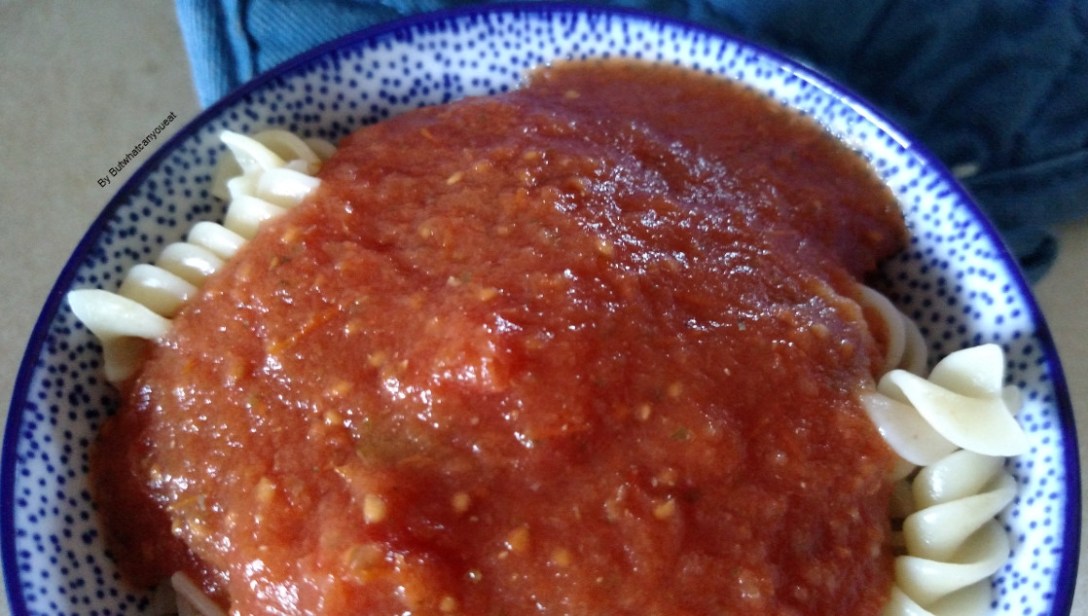
I chose to pair this with pasta for a quick and filling dinner, but you could easily add this to bulk up a soup, or as a dip for garlic bread. I hope you like it!

Additional Comments:

  • If you are having difficulty sourcing safe food, and need to find a CSA in your area, the USDA has a directory here.
  • If you’re using stock, please make sure to decrease the amount of salt you use, or risk the entire sauce tasting like the ocean!
  • You’ll notice I don’t have any sugar in here. That’s because I’m hesitant to add sugar to savory foods. My workaround for cutting the acid in the tomatoes is the finely grated carrot, which adds a nice layer of sweetness and texture to the sauce. I grate it using my microplane, but you can also just use a regular grater, or chop it up and then blend it with the tomatoes. The choice is yours!
  • A note about sieving: This recipe leaves the tomato skins in, rather than taking them out. If that texture bothers you, and you have a little time, when the sauce is still in the blender, ladle the sauce back into the pan through a sieve. That will get rid of the skins, and will also smooth out the sauce even further.

Savory Breakfast Soup

I think I’ve told you all before, but I don’t actually eat a lot of what we think of in the US as ‘breakfast food.’ Since I can’t have eggs or soy that generally rules out quiches, bagels, omelettes, casseroles…you get the idea. The USA loves its eggs and cheese (for which I cannot blame them!) but it does tend to rule me out.

In general, I eat leftovers from the day before with my morning coffee. I honestly can’t stand the texture of most porridge (oats make me itch!) and since I almost always have cooked rice in the fridge I either end up eating that with fake butter, or a smoothie. I don’t have as much of an appetite in the morning anyway, so a little something that wakes my stomach up works just fine for me.

That being said, one of the things I’ve discovered I can eat (with attendant changes for my allergies) is this Thai breakfast soup I’ve learned from Hot Thai Kitchen. It’s savory without being too rich, and fragrant without being overwhelming. Better still, the rice never becomes mushy or sticky, and it comes together very quickly.

In Pailin’s version, this is ‘Kao Tom Koong,’ made of rice, an onion/cilantro/garlic mash, broth, and shrimp. She also calls for soy sauce, which is not happening, but her version looks delicious and entirely worthwhile. Check out her channel for more recipes!

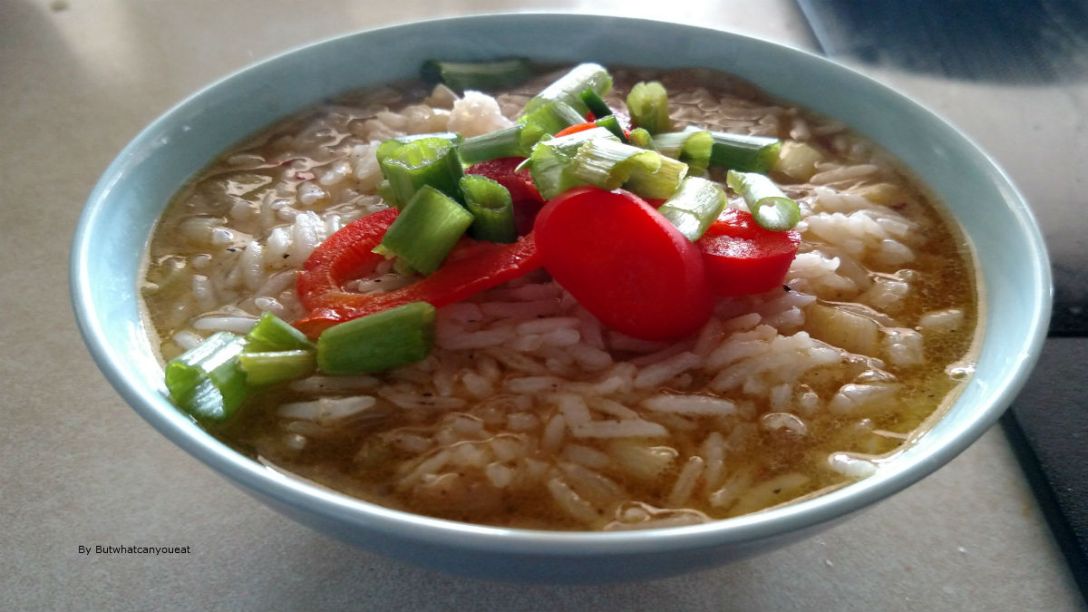
My version is made out of chicken (I don’t often have shrimp), and I like a lot of rice and slightly less broth. When I made it this time I decided to garnish it with some red pepper and green onion, which were wasting away in my fridge, but the sky’s the limit with regards to things to add. Ginger is delicious, and I think bits of crumbled bacon might be nice as well. It’s so good and so quick, and it uses a very few ingredients. I’m pretty sure I could eat three gallons of it, but I won’t! I will just eat it many times instead.

You’ll Need (Serves 1):

1/2 – 1 cup rice, already cooked and heated for 1 minute in the microwave

1/2 cup – 1 cup chicken broth

1 clove roasted garlic

1 tsp. cilantro

1/4 cup chopped onions

1/4 cup already cooked chicken, chopped (optional)

1 tsp. white pepper

1-2 tsps. fish sauce

Salt (to taste)

1 tsp. red pepper flakes

1 tsp olive oil

Heat a saucepan and cook the onions, garlic, and cilantro with the spices until the onions are translucent. Add in the broth and then the warm rice. If you’re using chicken or some other protein, add that in too, and then warm it all the way through. Pour into a bowl and then garnish with whatever you want!

Lemony Lentil Chickpea Soup

One of the consequences of making cookies when you’re allergic to eggs is that you wind up with a bunch of cooked chickpeas. (Sounds antithetical I know, but the liquid leftover from cooking chickpeas makes a good egg replacement!) When that happens, my horror of wasted food rises up, and forces me to Do Something.

Hummus, however, gets really old after awhile. I mean, there’s only so many times you can eat it and think “I’m having a treat.” So, when I need to make my food into a multi-tasking dynamo, I do the next best thing: I make soup!

The inspiration for this dish today comes from Yotam Ottolenghi, who makes dozens of dishes I would love to try, but sadly can never eat because of my allergies. Lemony Lentil Chickpea Soup is nourishing, tangy, and smoky with cumin, roasted garlic, and onions. It doesn’t take long to put all the ingredients together (I often use pre-cooked lentils and chickpeas, and just cook the onions through. It’s also great for those times when the pantry is looking a little scarce, and you need a solid contender for lunch or dinner.

I can eat way too much of this, frankly, and so it keeps for about a week in my fridge. It can also be frozen in single servings for a month, but the texture becomes a little too mushy for my tastes. However, if you want a pantry staple in your back pocket for those times you have leftovers and don’t know what to do, or simply have odds and ends that don’t quite seem to go together, then I submit this recipe. I hope you enjoy it!

You’ll Need (2 – 4):

2 cups chicken broth

1/2 cup of lentils (dry) or 1 cup cooked

1/2 cup of chickpeas, cooked

1/2 cup onion, chopped

2 tsps. cumin

4 tsps. salt

4 tsps. pepper

1 tsp. red pepper flakes

1 bay leaf

1 small handful of cilantro, chopped

1 handful of fresh spinach (optional)

Juice of half a lemon

2 tsps. olive oil

Heat a saucepan to medium with the oil and onions. Add the garlic, cumin, salt, and pepper to the vegetables and let the onions become translucent. When the onions et al are fragrant, add in the lentils, chickpeas, and bay leaf. Stir together and then add in the chicken broth. Stir again, reduce heat to medium-low and let the soup simmer until it just starts to bubble.

Add in the cilantro and let it wilt. Then, pour in the the lemon juice. Stir and let it heat for about two minutes, and then turn off the heat, and stir in the spinach. Serve hot and delicious!

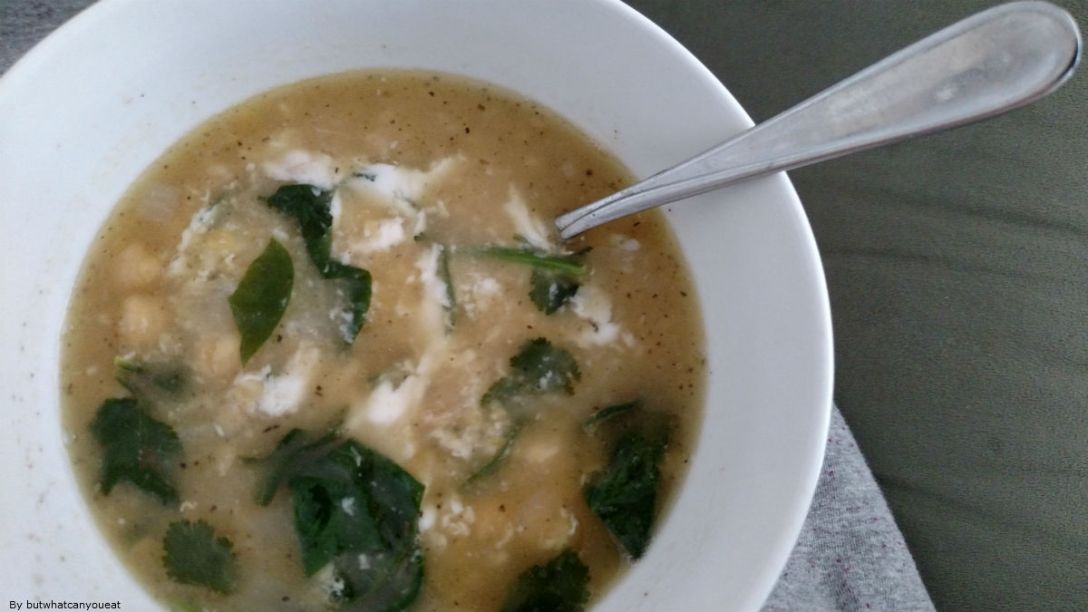
I like this soup (as you can see from the photo) with a dollop of unsweetened non-dairy yogurt stirred into it, but it’s delicious on it’s own as well. It’s also really good with a nice dense piece of bread!

Additional Comments:

  • If you’re cooking the lentils in the soup, make sure you’ve rinsed them thoroughly in cold water, and then looked them over for small stones. Increase the amount of broth by 2 cups, and add the lentils with the broth second to last after frying the onions, spices, and bay leaf, cook for about 15 minutes before you add the cooked chickpeas. I don’t recommend cooking dry chickpeas and lentils together, as they have different cooking times.
  • If you can’t find spinach safe from corn-based derivatives (often they drink up fertilizers as well as water!) then try a green safe for your consumption. I have been doing okay with the spinach from my grocery store for now, but I also wash it very well and there’s no guarantee!
  • If you’re vegan/vegetarian, you can easily sub a vegetable broth for the chicken, and still have a delicious gluten-free soup.

Honey Lemon Chicken

You know what’s fabulous? Chinese food.

The sheer size of China allows for a breathtaking amount of culinary diversity, from hot and spicy to sweet and delicate. Since we had a big family, we often had to go somewhere that would accommodate a large crowd, and the local Chinese restaurants filled that bill admirably. When I was a kid, I would look at the intricate mooncakes and family style dishes with badly suppressed curiosity.

You just could get so many things! You could order three or four dishes, and they were all something new with flavors I didn’t see at home (I inherited my adventuresome palate from my mom, really. She had a wok and a dream, but the eighties weren’t a great decade for spices in rural Oregon!) But the Chinese restaurants? Absolutely had our backs. Not only that, they had tea in little cups and, I mean, I was a kid, but being out with the family with pretty tea sets and a shared meal felt so delightfully fancy that to this day I gravitate to Chinese restaurants when I feel like a special meal.

Of course, now, most of the menu is off limits to me. Eggs feature in a lot of the dishes, many of the sauces, etc. use cornstarch or actual corn, there’s malt and/or barley in some of the vinegars, and it all uses soy (which I can maybe have once a month and then walk around looking sunburned), and then there’s the surprise peanuts lurking in the garnishes… What used to be fun is now a rather stressful experience requiring a lot of prep work and kitchen communication. So, when I want something to remind me of good times and family outings, I make my own approximation of a Chinese take out!

As you might have noticed, I’m a big fan of chicken and the way it tastes. I also love lemons. The recipe I have today is loosely based on the Orange Chicken recipe from The Woks of Life, a family-run food blog you’ve probably already heard of! And when I say ‘loosely’ I mean ‘exceptionally loosely.’ A ‘glancing acquaintance.’ The ‘We were at school together’ of a common effort at recipe making, because those guys have their culinary act together and I’m just coming up with stuff I like to eat that will please the family and won’t kill me. Or them, really.

So instead of cornstarch, we have tapioca. Instead of breading, I grilled the chicken, and instead of oranges, I used lemon juice. I haven’t been able to find a sesame oil I can use, so I just went with olive oil, and then I reconfigured the spices to meld with what I had on hand, and added some red peppers because I thought they bulked up the meal.

I liked the tangy sauce that resulted, and the way the honey gave the dish a more caramelized flavor. I liked how the spices warmed my stomach and the chicken was tender and juicy (which is difficult when all you have is the chicken breasts you found lodged in the freezer!)

You’ll Need (Serves 2 – 4):

To prepare the chicken:

2 – 4 chicken breasts or thighs, sliced into chunks

1/2 tsp. olive oil

2 tsps. Mirin (I can’t find a Shaoxing wine that works)

1/4 tsp cinnamon

2 cloves crushed garlic

1/4 chopped onions, or 2 tsps. onion powder

Salt and Pepper to taste (I used black pepper, because again, no white pepper yet)

Instructions: Chop up the chicken, and then put it, along with the spices, vegetables, and oils, into a ziplock bag and let it marinate in the fridge for at least 30 minutes to an hour depending on how much chicken you’re using.

For the sauce:

Juice of one whole lemon

1-2 tsps. fish sauce (this and mirin is my substitute for soy)

1/4 cup chicken stock

1-2 tsps. honey

1 tsp. red chili flakes

1 tsp. tapioca starch

Salt and Pepper to taste

Optional:

1 green onion, chopped

1/2 red pepper, chopped

1 – 2 heads of bok choy, chopped

To Make:

Put all the ingredients of your sauce into a bowl and stir in the tapioca starch with a fork. That way you can avoid little bumps of unwanted powder.

Heat a frying pan or wok with some olive oil on medium heat, and add your marinated chicken. Cook the chicken, turning once, until the bottom of the pan begins to develop a crust, and then add your vegetables. After the vegetables begin to soften, but not crisp, add in your sauce and stir gently to cover the meal. Cook everything together until the sauce easily coats the back of your spoon or spatula, and it’s nice and bubbling.

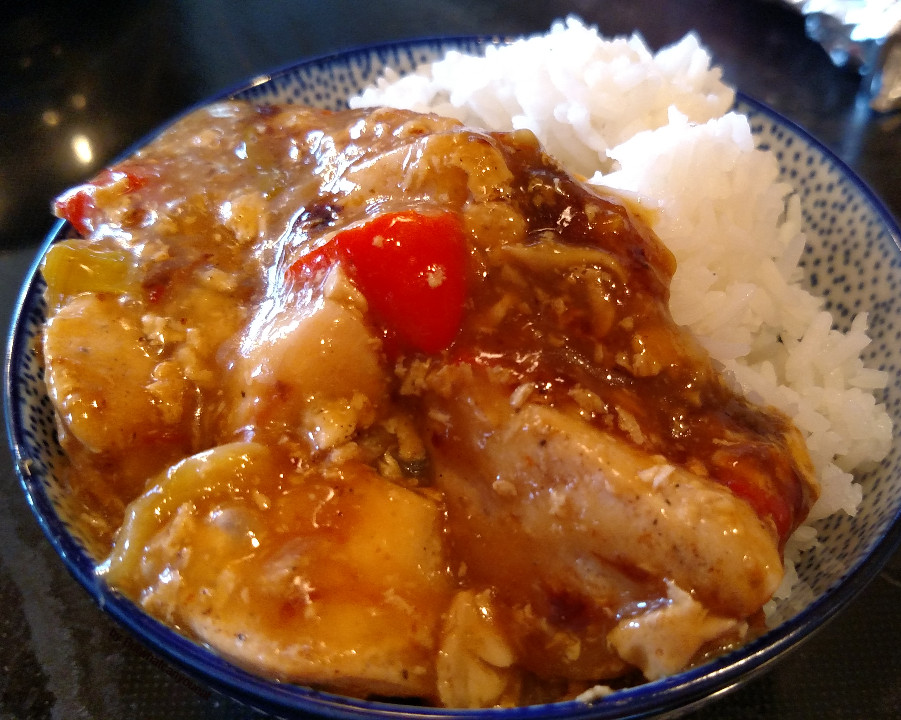
I like to have it with rice and a nice serving of garlic spinach or asparagus. The sharpness of the lemon pairs well with the melting sweetness of the honey, and the dish perks up my rather dreary not-quite-spring week. While it’s nowhere near the skill level of those Chinese restaurants in my memory, I feel like this is a good way to reincorporate the flavors I miss from when I was young. And, hey, if you can go and eat at your local Chinese restaurant today, do it for me, okay? I’ll live vicariously through you!

Lemon Paprika Chicken

The thing I like about chicken (Besides the fact that blood tests show I am very, very deeply not allergic to it) is its versatility. You can make a chicken in such a variety of ways and to so many tastes and budgets that it becomes the star of any meal.

An entire chicken is an expense–especially these days–but it’s also extremely good value for money. It feeds an entire family for a number of days, and the bones make broth to extend that deliciousness even further. My mother used to make a chicken for work for her (as she says) for at least a week and beyond, and I say good for her!

This is a recipe I make a lot for my family, using spices and herbs I’ve tasted before and can safely consume (the less said about the Smoked Paprika Debacle of 2019 the better!) so I hope you enjoy as it as much as I do.

You’ll Need (serves 4 – 8 people):

1 whole chicken, giblets removed

1 Tbsp. salt

1 Tbsp. black pepper

1 lemon, peeled and halved

3 tsp. paprika

2-3 cloves of garlic

1/2 onion

Olive Oil

1 large baking dish

Preheat your oven to 375F.

Get out a large baking dish and cover the inside with aluminum foil. Pour in a 1/2 tsp. of olive oil.

Take your whole chicken out of its wrapper or bag, and give it a good swipe with some water, and then pat it dry with some paper towels. If you want to make the skin a little more tight, or it’s got some feather remnants, rub the skin with a little salt and then clean it off again (or else the chicken will be too salty!) Now, check inside the chicken for that little bag of giblets. If it’s there, pull it out and set it aside on a napkin.

Place your chicken breast-sides up in the baking dish, and tuck the points of its wings under the body to help prevent burning. If you can’t, don’t worry about it, but it does make cooking a little easier.

Wash your hands! (Always wash your hands multiple times when dealing with chickens. It’s just good food safety practice!)

Peel your lemon, tear it in half, and then put the lemon, the garlic cloves, and the onion up inside the chicken. This will make dinner very flavorful, and imbue the meat from within.

Now, cover the outside of the chicken with the salt, pepper, and paprika. Then, go over the entire top of the chicken with a medium-thick layer of olive oil. Picture about 1/3 of a cup or so.

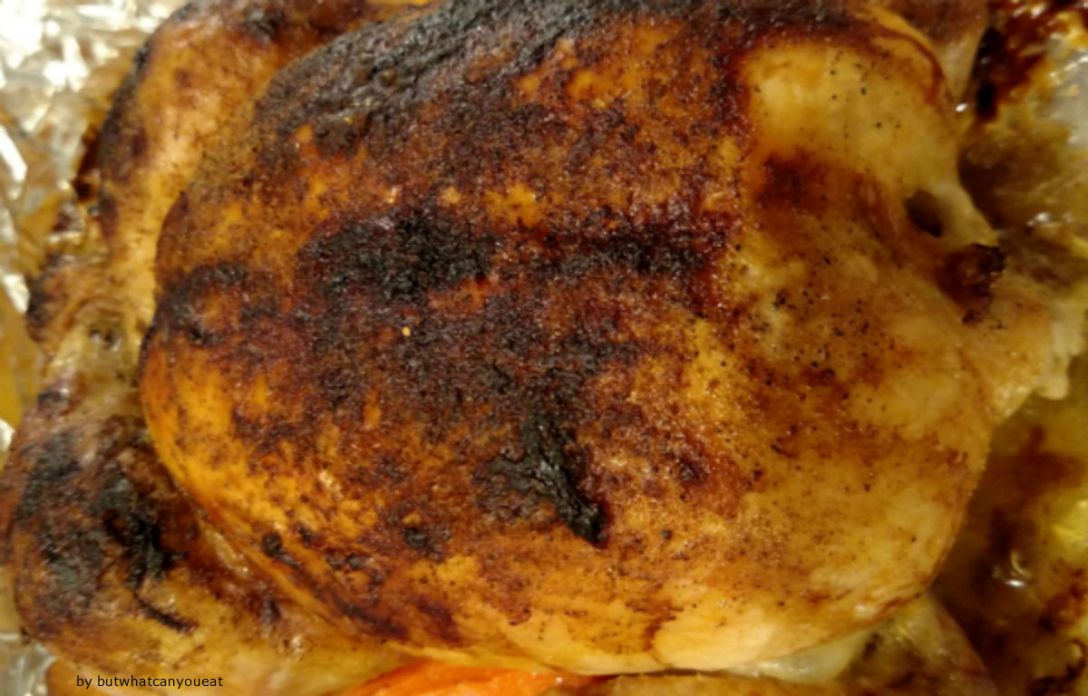
At this point, if you want, you can slice up some carrots and celery and place them around the chicken. They’ll cook together and make an excellent side dish! I do that often, as you can see from the picture, but I prefer to roast my potatoes in another dish, because I don’t like the texture when they cook alongside the chicken.

Place your baking dish full of chicken into the oven and cook from 1 1/2 to 2 hours at 350F. You’ll know the chicken is cooked when you poke the skin with a fork and the juices run clear. If you have any concerns, shove it back into the oven for fifteen minutes and then check it again. There are no heroes in undercooked chicken! There are only trips to the doctor’s office.

After enough time has passed, take the chicken out of the oven, and set it on a trivet to cool, and let it rest for about 5 minutes. I don’t know why, but letting meat rest out of the oven is supposed to allow it to relax and retain more of the juices still inside the meat. Cut the meat from the bones, and serve with hasselback potatoes or roasted sweet potato bites, and a good helping of peas!

Additional Comments:

If you don’t have a lemon, substitute Lemon Thyme, which gives the chicken a really nice, light flavor

If your supermarket’s butcher cuts up chicken for free, you could do this recipe with half a chicken, or two quarter pieces. Just adjust the cooking time to about an hour, and check on it often

Throw out the oily herbs and vegetables, etc. you cooked with, but pour the cooking liquid left over in the pan into a bowl. You can stick it in the fridge, and then add it to the stock pot when you make broth later!

Vegan Pesto Pasta: The Oregonian Treat

All right, that isn’t a thing, and no one other than me probably remembers that Rice-A-Roni jingle, but the title made me laugh, so I’m using it. Ha!

I’m told traditional pesto has a great deal of cheese in it, and reading the labels of the little jars in the supermarket certainly bears that out. I’ll be honest, I bet it’s fabulous (my mother certainly agrees!) but since I can’t have it, I decided to come up with a version that would taste good to me and my family members whose bodies work properly. It’s been taste-tested numerous times as a quick, easy meal for a weekend lunch or dinner, when all anyone really wants to do is poke someone else until they’ll do the cooking. Got 10 minutes? You got a meal!

You’ll Need (serves 6):

1 bag of fresh spinach, washed and dried

1 big handful of fresh basil leave, washed and dried, or 2 Tbsps. dried basil

1/2 cup sunflower seeds, roasted in their own oil

1-2 large cloves of garlic

Juice from 1/2 of a lemon, or about 2 Tbsps.

Salt and Pepper to taste

Olive Oil (I tend to use 1/3 – 1/2 cup)

Put all the ingredients, except for the oil, into a food processor or blender, and turn the machine on to high. While it’s running, pour in olive oil. If the mixture begins to stick high up the sides, stop the machine, and push down the concoction so the blades can reach it. Turn it back onto high and keep adding olive oil until the whole thing looking like a sauce. Mine didn’t take more than five minutes (and quite possibly less!)

Turn off the machine and taste test it. Is it too sharp? Add more spinach. Does it need more salt? Add some. Sauces are really things that you have to make to your specific taste. I can’t add nutritional yeast to this, as people often do, because I get different answers to my allergy questions from within the same companies. That’s why I add lemon juice for brightness, but if you can eat nutritional yeast, then feel free to add a teaspoon or two for your own pleasure. Tell me how it tastes, I’ve always been curious!

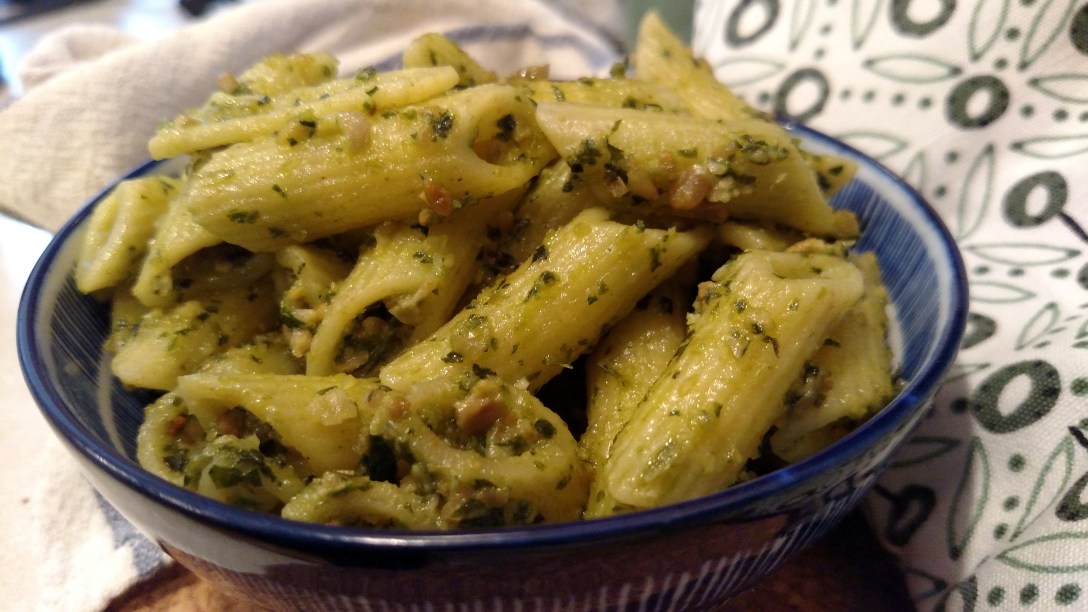
To serve this, I made gluten free pasta. I drained it, and let the hot noodles cook the sauce a little to draw out the flavors. I didn’t reserve any of the pasta liquid, but if you’re eating traditional pasta, then you should absolute keep back a half a cup or so to meld the sauce with the starches.

I like this recipe. It’s got a wonderfully basil overtone, and I think the spinach gives it heft and body. The lemon and garlic give it an entirely unctuous quality, which I know sounds silly, but that’s how it tasted to me. Sometimes I’ll add shrimp if I’m quite hungry, but usually I just eat it plant-based, just as is. It’s lovely hot, or cold the next day.

Additional Comments:

Just to remind you, if you use bagged spinach, there’s a likelihood that you might accidentally have cross-contamination with a corn-based cleaning wash that they use on the loose leaves. If possible, try to get spinach that’s unbagged or from a brand you’ve used before and not reacted to. I also always thoroughly wash my vegetables, regardless if they say they’ve been pre-washed or not. I know it’s a hassle, but I always want people to be as safe as possible. If you have a very sensitive allergy, then this might not help you, but it works for me!

Citrus fruits can often have corn-based wax on their peels in order to lock in their freshness. I’m doing okay just peeling them and only having the juice or pulp. I never use lemon peel.

Fancy Oven-Cooked Steak Dinner

This one’s for my littlest brother, who loves a good steak dinner.  To be frank, I don’t eat a lot of red meat (I think I ate about…half of that steak in the above picture, and then spent the rest of the night groaning about how full I was!) because I spent some real difficult months where my body reacted to all meats that weren’t chicken with severe disapproval. I’ve gotten out of the habit almost entirely by now, and you’re far more likely to find me roasting a chicken or getting a nice piece of salmon. I do know how to cook a steak, however, and since I have family members that can eat what I cannot, I thought I’d share my recipe with you all!

If you have a lot of allergies, as I do, one of the aspects of food prep for any meal is often not simply knowing your ingredients, but know what your ingredients contain. Minced garlic from a jar isn’t simply minced garlic, but water, salt, and/or citric acid (corn!). Ground flour might have been passed through a grinder which just made Masa or TVP (corn and soy, respectively!) Worcestershire sauce might be perfectly fine in one batch, but contain an unfortunate preservative in the next. It’s the same if you’re eating meat.

If you can, ask your butcher if the steak you’re buying comes from corn-fed cows, especially if you’ve got a severe allergy. If it’s not, ask if they’ve been treated with any kind of preservative. Finally, and this one always makes me feel silly, but persevere and be picky! Try for the steak as far away from touching other foods in the display case as possible. You can always wash them later, of course, with cold water and a quick paper towel pat down to dry them, but it’s good to be assured that your meat hasn’t been cuddling up to something to which you might be allergic.

Steak is kind of a fancy meal, in my opinion, which is why I went all out with fancy hasselback potatoes and then brought us back to earth with simple roasted carrots. It’s something to bring out for the holidays and special occasions. I like my steaks to be spiced, but fairly plain, with good fat marbling through the meat. When you’re cooking a steak, the amount of time necessary depends on how thick the cut of meat is. The steak in the picture above is really thick, so rather than risk burning it, I seared on the stovetop and finished it in the oven.

You’ll Need (1-2 servings, depending on appetite!):

1 steak, about 8 oz.

Salt, to taste

Black Pepper, to taste

¼ tsp. garlic powder, or one cut, raw clove for rubbing

¼ tsp. onion powder

1 tsp. olive oil

Take your steak out and coat it in your seasonings on both sides of the meat. If you’re using a raw garlic clove, rub the cut end all over the garlic (don’t be afraid to press down, but don’t leave little pieces of garlic to burn on it). Leave it alone while you heat up a pan on the stove.

Heat the pan on medium until a little bit of water spritzed on the surface makes the droplets skitter and dance. Then rub olive oil on the steak, again on both sides. Turn on your stove’s fan, and/or open a window because it’s about to get steamy and smoky in there!

Preheat your oven to 350F.

You judge the time to cook by the steak’s thickness; I use the rule of my thumb. If the steak is as thick as your thumb, cook it for 2-3 minutes each on both sides. If the steak is thicker, say as thick as the length of your forefinger, cook it for 3-4 minutes on either side in your pan.

If you’re using an oven-safe pan, transfer the whole thing into the oven and cook it for around 10-20 minutes, depending on how rare you want your meat. If you’re not using an oven-safe pan, then you can use a jelly roll pan covered in aluminum foil or any tray with a lip to cook the meat for the same amount of time. I don’t recommend using a casserole dish, because the sides are too big and might trap moisture you don’t want.

Take the meat out and rest it for 10-15 minutes.  Then get out a good strong knife and serve!