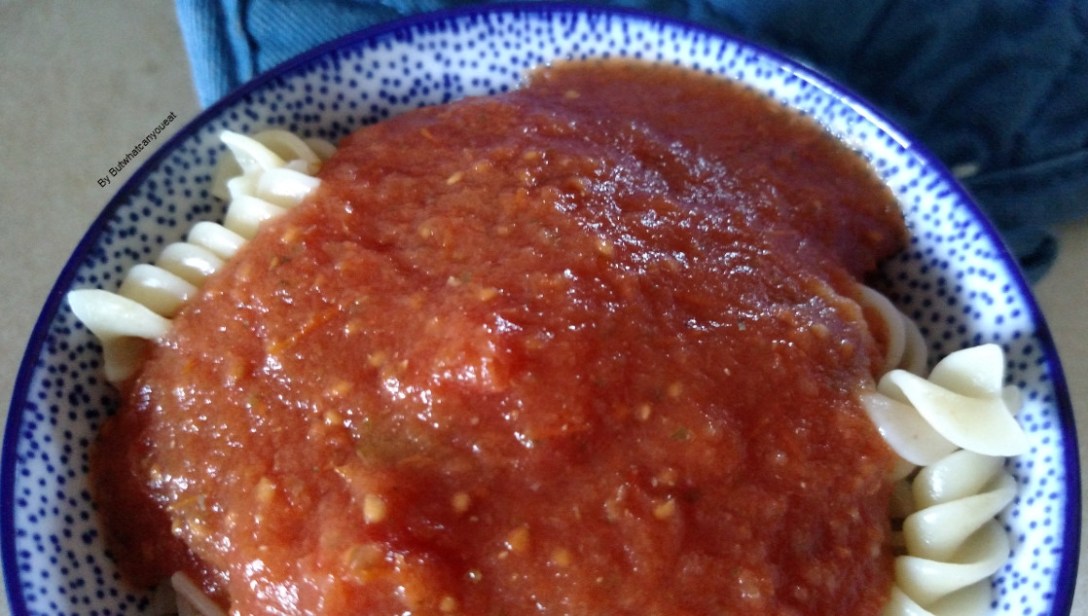
Quick Time Tomato Sauce

Got thirty minutes and some tomatoes burning a hole in your fridge? I have a sauce for that!

Now, I will be honest, this isn’t a fancy sauce. It’s straight up tomato sauce meant to clear space in the fridge and create a quick, hearty meal with maybe three or four ingredients total (not counting the herbs). Which is to say, I think of this sauce as a base for any kind of vegetables or meat that I have leftover, or that maybe wouldn’t be great served on its own, but lets face it: Almost everything is better slapped onto pasta.

This sauce is great for a quick dinner solution. I have a weirdly hard time eating up raw tomatoes, but stick them in a salsa or a sauce and I can slurp it up like nobodies business. The way I make it is very simple, gluten-free, and vegan, but you could add anything you’d like to it to personalize this tomato sauce into your own special treat!

You’ll Need (serves 2 – 4):

1 lb grape tomatoes, or 4-5 medium tomatoes

Around 3 cups of water (or stock)

2 tsps salt (and then more to taste)

2 tsps pepper (and then more to taste)

2-4 cloves of garlic, or 2 tsps. garlic powder

1/4 cup chopped onions, or 2 tsps onion powder

1 carrot, finely shredded

2 tsps parsley

2 tsps oregano

2 tsps basil

Make sure all your vegetables are thoroughly rinsed! This is no time to be cavalier with hygiene, especially if you’ve got food allergies. I have been doing okay with store bought veggies, but stick with a brand you know you can eat safely, either from the store or a farm.

Get out a large saucepan and add your vegetables all in with the water, salt, and pepper. Be liberal with the salt at this stage, because you’ll want to be stingy afterward, and the salt in the water here will flavor your sauce. The water should be about level with the tops of the tomatoes. Turn the burner to medium or medium-low, and bring it up to a soft boil for about fifteen minutes, or whenever the tomatoes start to burst their skins. Take the saucepan off the heat, and let it cool down for a minute.

Toss the entire thing, veggies, water and all, into a blender, and blend it until smooth. If you have a small blender, like I do, just blend it in shifts until everything looks…well, until it looks like a sauce. I like it smooth, but if you want it a bit chunky, then I’m not gonna fault you!

Return the frothy sauce mix to the sauce pan and stir in the herbs. Remember that this is going to boil down by half, so when you taste it, don’t be alarmed if it’s not as flavorful as you might expect. Turn the burner on to about medium-low, and reduce by half, or when it reaches the kind of consistency you like in a tomato sauce, stirring occasionally. Taste it before serving to see if it needs any salt or pepper. It shouldn’t take more than thirty minutes or so, from start to finish!

I chose to pair this with pasta for a quick and filling dinner, but you could easily add this to bulk up a soup, or as a dip for garlic bread. I hope you like it!

Additional Comments:

  • If you are having difficulty sourcing safe food, and need to find a CSA in your area, the USDA has a directory here.
  • If you’re using stock, please make sure to decrease the amount of salt you use, or risk the entire sauce tasting like the ocean!
  • You’ll notice I don’t have any sugar in here. That’s because I’m hesitant to add sugar to savory foods. My workaround for cutting the acid in the tomatoes is the finely grated carrot, which adds a nice layer of sweetness and texture to the sauce. I grate it using my microplane, but you can also just use a regular grater, or chop it up and then blend it with the tomatoes. The choice is yours!
  • A note about sieving: This recipe leaves the tomato skins in, rather than taking them out. If that texture bothers you, and you have a little time, when the sauce is still in the blender, ladle the sauce back into the pan through a sieve. That will get rid of the skins, and will also smooth out the sauce even further.
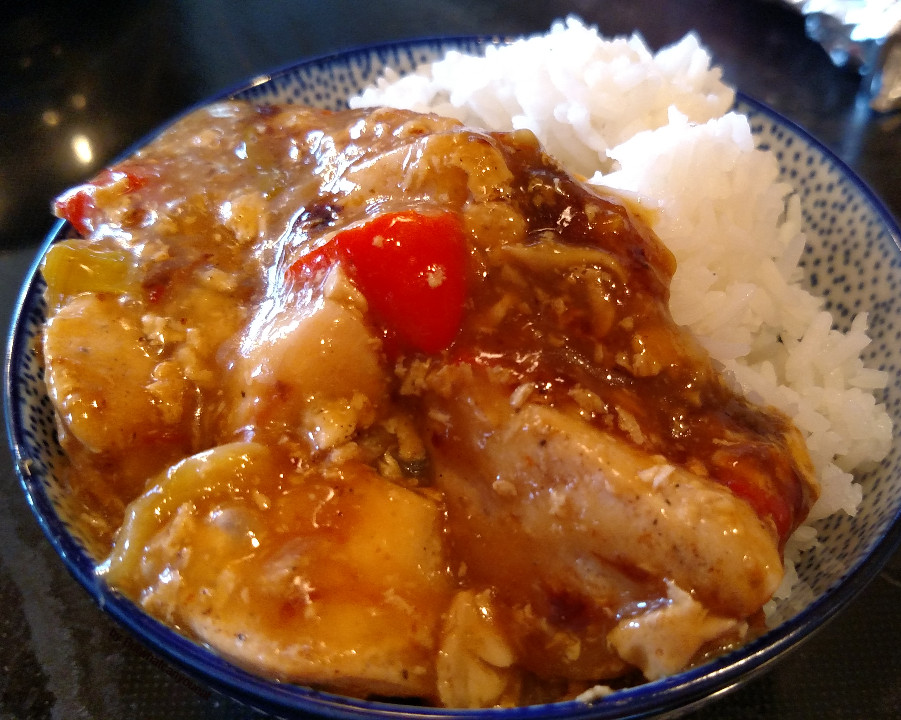
Honey Lemon Chicken

You know what’s fabulous? Chinese food.

The sheer size of China allows for a breathtaking amount of culinary diversity, from hot and spicy to sweet and delicate. Since we had a big family, we often had to go somewhere that would accommodate a large crowd, and the local Chinese restaurants filled that bill admirably. When I was a kid, I would look at the intricate mooncakes and family style dishes with badly suppressed curiosity.

You just could get so many things! You could order three or four dishes, and they were all something new with flavors I didn’t see at home (I inherited my adventuresome palate from my mom, really. She had a wok and a dream, but the eighties weren’t a great decade for spices in rural Oregon!) But the Chinese restaurants? Absolutely had our backs. Not only that, they had tea in little cups and, I mean, I was a kid, but being out with the family with pretty tea sets and a shared meal felt so delightfully fancy that to this day I gravitate to Chinese restaurants when I feel like a special meal.

Of course, now, most of the menu is off limits to me. Eggs feature in a lot of the dishes, many of the sauces, etc. use cornstarch or actual corn, there’s malt and/or barley in some of the vinegars, and it all uses soy (which I can maybe have once a month and then walk around looking sunburned), and then there’s the surprise peanuts lurking in the garnishes… What used to be fun is now a rather stressful experience requiring a lot of prep work and kitchen communication. So, when I want something to remind me of good times and family outings, I make my own approximation of a Chinese take out!

As you might have noticed, I’m a big fan of chicken and the way it tastes. I also love lemons. The recipe I have today is loosely based on the Orange Chicken recipe from The Woks of Life, a family-run food blog you’ve probably already heard of! And when I say ‘loosely’ I mean ‘exceptionally loosely.’ A ‘glancing acquaintance.’ The ‘We were at school together’ of a common effort at recipe making, because those guys have their culinary act together and I’m just coming up with stuff I like to eat that will please the family and won’t kill me. Or them, really.

So instead of cornstarch, we have tapioca. Instead of breading, I grilled the chicken, and instead of oranges, I used lemon juice. I haven’t been able to find a sesame oil I can use, so I just went with olive oil, and then I reconfigured the spices to meld with what I had on hand, and added some red peppers because I thought they bulked up the meal.

I liked the tangy sauce that resulted, and the way the honey gave the dish a more caramelized flavor. I liked how the spices warmed my stomach and the chicken was tender and juicy (which is difficult when all you have is the chicken breasts you found lodged in the freezer!)

You’ll Need (Serves 2 – 4):

To prepare the chicken:

2 – 4 chicken breasts or thighs, sliced into chunks

1/2 tsp. olive oil

2 tsps. Mirin (I can’t find a Shaoxing wine that works)

1/4 tsp cinnamon

2 cloves crushed garlic

1/4 chopped onions, or 2 tsps. onion powder

Salt and Pepper to taste (I used black pepper, because again, no white pepper yet)

Instructions: Chop up the chicken, and then put it, along with the spices, vegetables, and oils, into a ziplock bag and let it marinate in the fridge for at least 30 minutes to an hour depending on how much chicken you’re using.

For the sauce:

Juice of one whole lemon

1-2 tsps. fish sauce (this and mirin is my substitute for soy)

1/4 cup chicken stock

1-2 tsps. honey

1 tsp. red chili flakes

1 tsp. tapioca starch

Salt and Pepper to taste

Optional:

1 green onion, chopped

1/2 red pepper, chopped

1 – 2 heads of bok choy, chopped

To Make:

Put all the ingredients of your sauce into a bowl and stir in the tapioca starch with a fork. That way you can avoid little bumps of unwanted powder.

Heat a frying pan or wok with some olive oil on medium heat, and add your marinated chicken. Cook the chicken, turning once, until the bottom of the pan begins to develop a crust, and then add your vegetables. After the vegetables begin to soften, but not crisp, add in your sauce and stir gently to cover the meal. Cook everything together until the sauce easily coats the back of your spoon or spatula, and it’s nice and bubbling.

I like to have it with rice and a nice serving of garlic spinach or asparagus. The sharpness of the lemon pairs well with the melting sweetness of the honey, and the dish perks up my rather dreary not-quite-spring week. While it’s nowhere near the skill level of those Chinese restaurants in my memory, I feel like this is a good way to reincorporate the flavors I miss from when I was young. And, hey, if you can go and eat at your local Chinese restaurant today, do it for me, okay? I’ll live vicariously through you!

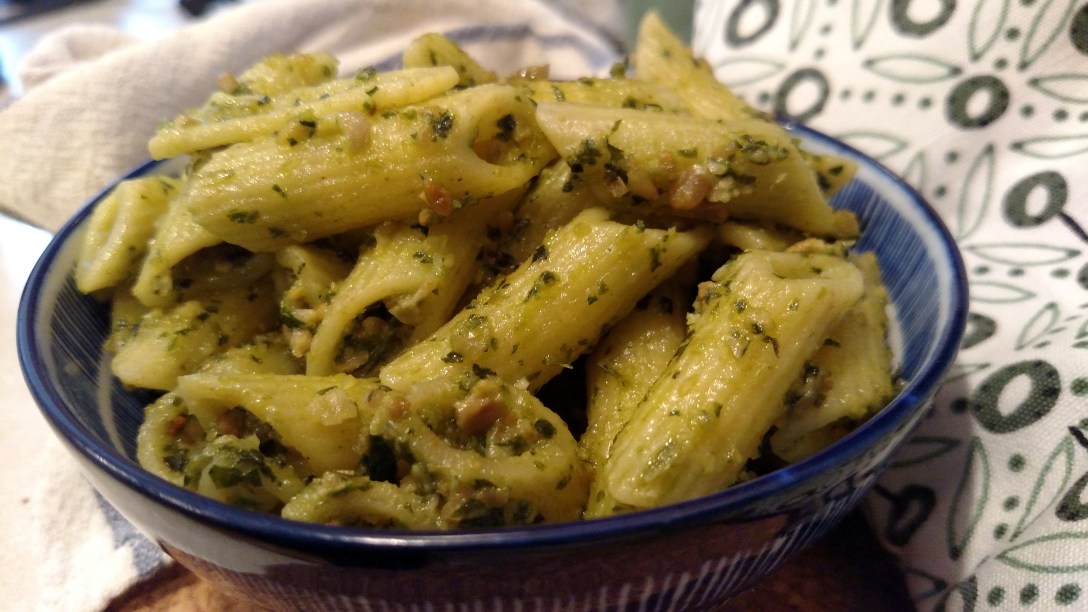
Vegan Pesto Pasta: The Oregonian Treat

All right, that isn’t a thing, and no one other than me probably remembers that Rice-A-Roni jingle, but the title made me laugh, so I’m using it. Ha!

I’m told traditional pesto has a great deal of cheese in it, and reading the labels of the little jars in the supermarket certainly bears that out. I’ll be honest, I bet it’s fabulous (my mother certainly agrees!) but since I can’t have it, I decided to come up with a version that would taste good to me and my family members whose bodies work properly. It’s been taste-tested numerous times as a quick, easy meal for a weekend lunch or dinner, when all anyone really wants to do is poke someone else until they’ll do the cooking. Got 10 minutes? You got a meal!

You’ll Need (serves 6):

1 bag of fresh spinach, washed and dried

1 big handful of fresh basil leave, washed and dried, or 2 Tbsps. dried basil

1/2 cup sunflower seeds, roasted in their own oil

1-2 large cloves of garlic

Juice from 1/2 of a lemon, or about 2 Tbsps.

Salt and Pepper to taste

Olive Oil (I tend to use 1/3 – 1/2 cup)

Put all the ingredients, except for the oil, into a food processor or blender, and turn the machine on to high. While it’s running, pour in olive oil. If the mixture begins to stick high up the sides, stop the machine, and push down the concoction so the blades can reach it. Turn it back onto high and keep adding olive oil until the whole thing looking like a sauce. Mine didn’t take more than five minutes (and quite possibly less!)

Turn off the machine and taste test it. Is it too sharp? Add more spinach. Does it need more salt? Add some. Sauces are really things that you have to make to your specific taste. I can’t add nutritional yeast to this, as people often do, because I get different answers to my allergy questions from within the same companies. That’s why I add lemon juice for brightness, but if you can eat nutritional yeast, then feel free to add a teaspoon or two for your own pleasure. Tell me how it tastes, I’ve always been curious!

To serve this, I made gluten free pasta. I drained it, and let the hot noodles cook the sauce a little to draw out the flavors. I didn’t reserve any of the pasta liquid, but if you’re eating traditional pasta, then you should absolute keep back a half a cup or so to meld the sauce with the starches.

I like this recipe. It’s got a wonderfully basil overtone, and I think the spinach gives it heft and body. The lemon and garlic give it an entirely unctuous quality, which I know sounds silly, but that’s how it tasted to me. Sometimes I’ll add shrimp if I’m quite hungry, but usually I just eat it plant-based, just as is. It’s lovely hot, or cold the next day.

Additional Comments:

Just to remind you, if you use bagged spinach, there’s a likelihood that you might accidentally have cross-contamination with a corn-based cleaning wash that they use on the loose leaves. If possible, try to get spinach that’s unbagged or from a brand you’ve used before and not reacted to. I also always thoroughly wash my vegetables, regardless if they say they’ve been pre-washed or not. I know it’s a hassle, but I always want people to be as safe as possible. If you have a very sensitive allergy, then this might not help you, but it works for me!

Citrus fruits can often have corn-based wax on their peels in order to lock in their freshness. I’m doing okay just peeling them and only having the juice or pulp. I never use lemon peel.