Coconut Cream Chocolate Cake

You ever need a dessert that doesn’t take a lot of time and comes out looking presentable for company? I don’t often have that need, but I’m eating Christmas at someone else’s home this year, and one of the ways I like to contribute (and ensure that there’s a dessert I can eat!) is to volunteer myself to bring a cake, or some cookies, or a couple of sides, a chicken, and the left hand side of the menu.

Look, I get nervous when I eat out, okay? Two weeks ago, I had half a sandwich at Panera and wound up with a tight throat, three days’ worth of hives, and a depleted Benadryl stash. This is through no fault of the company of course! I had told the servers I have food allergies. This is just the risk I run when I eat outside my own kitchen, even when I’m eating foods I haven’t reacted poorly to before.

So to make myself feel better, and to help me gear up for the holiday cooking marathon, I decided to make a cake. A chocolate cake to be precise, using gluten free flours, and more cocoa powder than is probably good for me. It also let me test out an idea I had for a cake without all the fake butter, which I didn’t have in the fridge, and nut milk…which I had forgotten the night before.

But what makes a cake? The reason we use butter and milk is because we need liquid and fat to create something more unctuous than sugar and flour can provide; it’s the difference between cake and enriched bread. So I vaguely remembered a friend passing me a cake recipe without eggs, butter, or milk that only needed coconut cream (I have looked and looked, but I cannot find the recipe! So thank you, anonymous cake maker, and if I ever find that link again I will be including it here).  I needed to make one big enough to share, but not overwhelming and—since I had the idea that all that coconut would make it way to rich, be able to stand on its own without frosting.

Most cakes, especially gluten-free and plant-based cakes, are just as delicious as fully dairy, egg, and sugar cakes are. Unfortunately, none of those are guaranteed to be allergy-friendly, much less allergy-free!  Like many people, I can’t have baking powder or eggs, vanilla extract, or xanthan gum. But I can have coconut, and that’s all the delightfully fatty goodness I need to make a cake.

The result is a chocolatey delight, rich enough to satisfy anyone’s dessert cravings. It’s quite dense and rich because of the coconut cream, but I didn’t taste any coconut when I tried a piece. Or the morning after, when I tested it again. Or the day after that. Look, I ate a lot of it, and had no complaints.  I made three 5″ cakes, and popped one in the freezer (that’s what I do with practically everything) and it defrosted well. To make it fancy, I shook some powdered sugar over the top, but I think it holds up well on its own. Maybe next time I’ll add an edible flower or two?

You’ll Need (serves 6-10):

1 1/2 cups white sugar

1 13oz. can coconut cream, shaken well and at room temperature

½ tsp. baking soda

1 tsp. salt

1 Tbsp. cold water

4 flax eggs

1 cup cocoa powder

1/3 brown rice powder

1/3 millet flour

1/3 sorghum flour

1/2 cup arrowroot flour

Preheat your over to 375F. 

Make your flax eggs fifteen minutes before starting your cake, and then mix all the ingredients except the flours and baking soda together. In a different bowl, stir the flours and the baking soda together, and then slowly add it into the wet mixture. Stir the cake together until there are no lumps and make sure you’re incorporating some air (try counting to 360 while stirring, if you’re doing it by hand).

Grease two 8”-9” pans, or three 5’ pans (like I did). Pour the cake batter up to a little over the halfway mark in each pan, and let them rest for about twenty to thirty minutes.

Decrease the temperature in the oven to 350F, and put your cake pans in!  Cook for about 30-40 minutes, or until a fork stuck in the middle of the cakes comes out cleanly.

Cool the cake in the pan for ten minutes, before turning the pan upside down on a cooling rack and letting it complete cool.

Additional Reminders:

  • Don’t be alarmed if your coconut cream had tiny white chucks floating in it! Those are okay.  If you open the can and the coconut cream is too hard to mix, spoon it into a microwave safe bowl and warm it up in the microwave for fifteen seconds.
  • If you’re making this cake with regular AP flour, then you don’t need to let the batter rest, and you can take out the eggs entirely. The flax eggs in the gluten free recipe are to provide structure for the GF flours.
  • If you’re in a rush, turn this into cupcakes! They’ll cook faster, and they’re more portable. After about twenty minutes, stick a fork in the center cupcake to test the doneness.
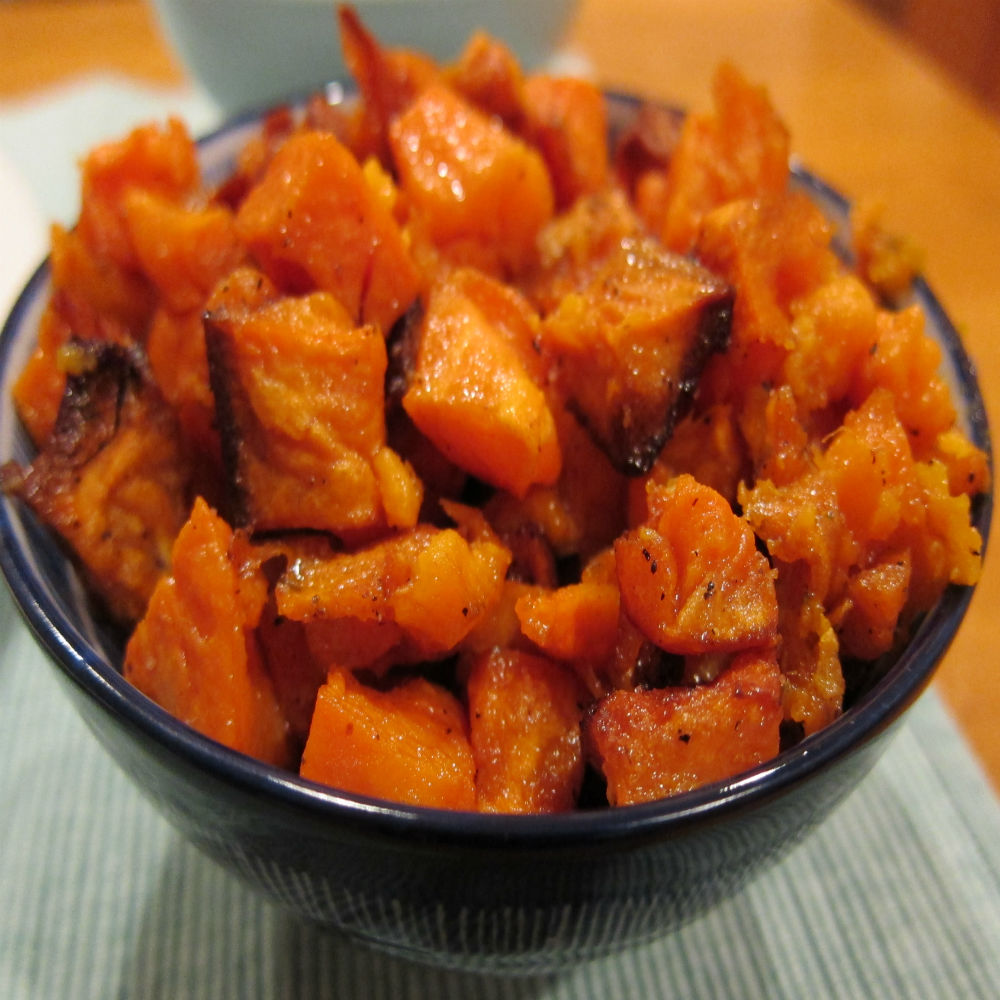
Roasted Sweet Potato Bites

I love sweet potatoes, let’s just begin there. They’re sweet without being cloying, they’re delicious, and you can make them with a minimum of fuss which I deeply appreciate in a root vegetable. You scrub ‘em up, oil ‘em down, stab them a few times, then stick them in the oven until they pop out steamy and fluffy and delicious. Sweet potatoes: They’re great!

But sometimes I want to be fancy, like on Thanksgiving, and when I want to push the boat out a little I go to this recipe for diced, roasted sweet potatoes. They take a little work, but they come out sweet and tangy, and so entirely worth it.

Just remember, if you don’t have a food processor, it’s perfectly fine to cut the sweet potatoes into larger chucks. I find the safest method for me is to turn the potato over by a half or a quarter turn (depending on size) each time I make a cut while holding my knife firmly at an angle.

You’ll Need (serves 2 – 4):

2 – 4 sweet potatoes, cleaned, skinned and diced

1 – 2 tsp. ground ginger

1 – 2 tsp garlic

2 – 3 tsp. sugar

2 tsps. Rice vinegar

1/2 – 1/3 cup of oil

Salt and Pepper to taste

Preheat your oven to 375F

Clean your sweet potatoes with cold water, and then skin and dice them. Use either a food processor or a good sharp knife. Take a large bowl and put the ginger, garlic, sugar, rice vinegar, and oil, salt, and pepper into a large bowl.  Toss the sweet potatoes in the mixture and then pour it out onto either a large baking dish or a roasting sheet lined with aluminum foil.

Put the sweet potatoes in the oven, and decrease the temperature to 350F. Keep an eye on them in case the sugar starts to burn. They should cook, depending on size and amount, from forty minutes to an hour, but make sure to try and turn the potatoes at least once. Once they’re cooked through (you should be able to stick a fork easily in the largest piece) take them out, and spoon them into your serving dish.

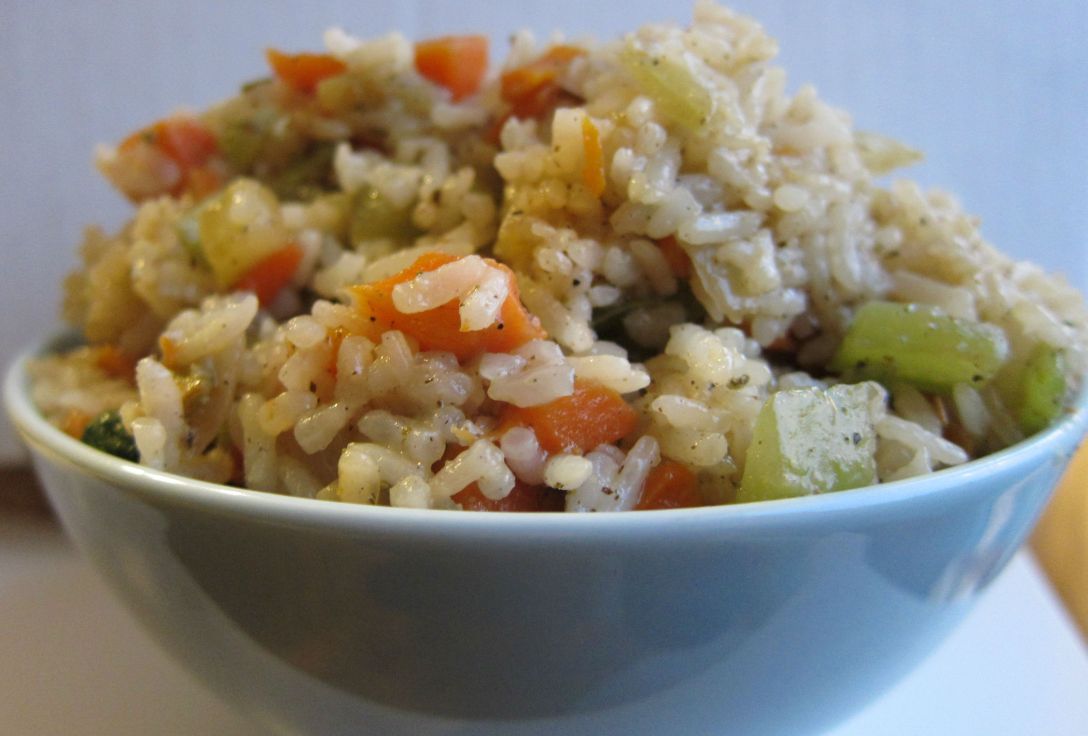
Rice Stuffing For the Rest of Us: Gluten-free and Allergy-Friendly

In my family, the side dish you’re always going to see is rice. I can eat it, my mother can eat it, my little brother can eat more of it, but he is only smaller than me in years so that makes sense (seriously, it’s so difficult to be so much older and yet so much shorter!) Even when I could eat practically nothing without reacting to it, I could eat jasmine rice.

But on Thanksgiving—at least in my family—there was never a grain of rice to be seen. It just wasn’t a part of my grandmother’s traditional menu, and changing that line up required an Act of Congress and a two-thirds majority of Aunts. When I was younger, it wasn’t so much of a problem, but now that my food allergies outlaw so many commercial brands and ingredients, putting together a meal that both tastes good and reminds me of my childhood Thanksgivings takes a little bit more ingenuity. Enter Rice Stuffing!

I knew two things I wanted when I set about putting this recipe together: I wanted it to taste like regular stuffing and I wanted the whole dish not to take forever and a day to cook. I think I’ve succeeded on both fronts with this recipe, which creates mound after mound of flavorful rice stuffing dotted with vegetables and herbs. It’s easily adaptable to whatever stuffing recipe you hold dear to your heart as well, and it’s absolutely no muss, no fuss.

You’ll Need (makes 6 servings):

2 cups cooked white jasmine rice

2 carrots, diced small

2 celery stalks, diced small

1 medium-sized onion, diced small

2 – 3 Tbsps. Olive oil

2 cloves roasted garlic, either smushed or chopped

2 tsps. salt

2 tsps. black pepper

1 tsp. red pepper flakes

2 tsps. thyme

2 tsps. sage

1 tsp. rosemary

2 tsps. parsley

1/2 – 2/3 cup broth (use mushroom broth to make it vegan!)

Optional:

1 cup crumbled sausage meat for a heartier dish (cooked with the vegetables)

1 cup button mushrooms, chopped (cooked with the vegetables)

Make the rice ahead of time. When you put the rice into the mix, it should be room temperature, but not cold. You’re also going to need a metal spatula to scrape the bottom of your pan.

Put your oil into a deep frying pan and heat the pan to medium. Dice up your vegetables and add them to the pan, making sure to also add in all the herbs and spices, except for your garlic.  Let that cook down, stirring occasionally, the vegetables soften and the onions become translucent. Add in your garlic and stir until you can smell it.

Push all your vegetables to the sides of the pan, and make a well. Add in your cooked rice, and break up any clumps with your spatula. You want the rice to warm through, so carefully stir it in with the vegetables. When the rice mixture begins to stick to the bottom of the frying pan, creating a sort of brown skin, slowly begin pouring in your broth. You want to add enough liquid that the rice plumps up a bit and comes away from the bottom of the pan, but not enough to drown the rice and make it a solid mushy mess.  Keep turning the stuffing in the pan until every grain of rice shines with the ‘sauce’ you’ve created and the food has begun to stick again. Then, transfer to a serving dish, and it’s ready to go!

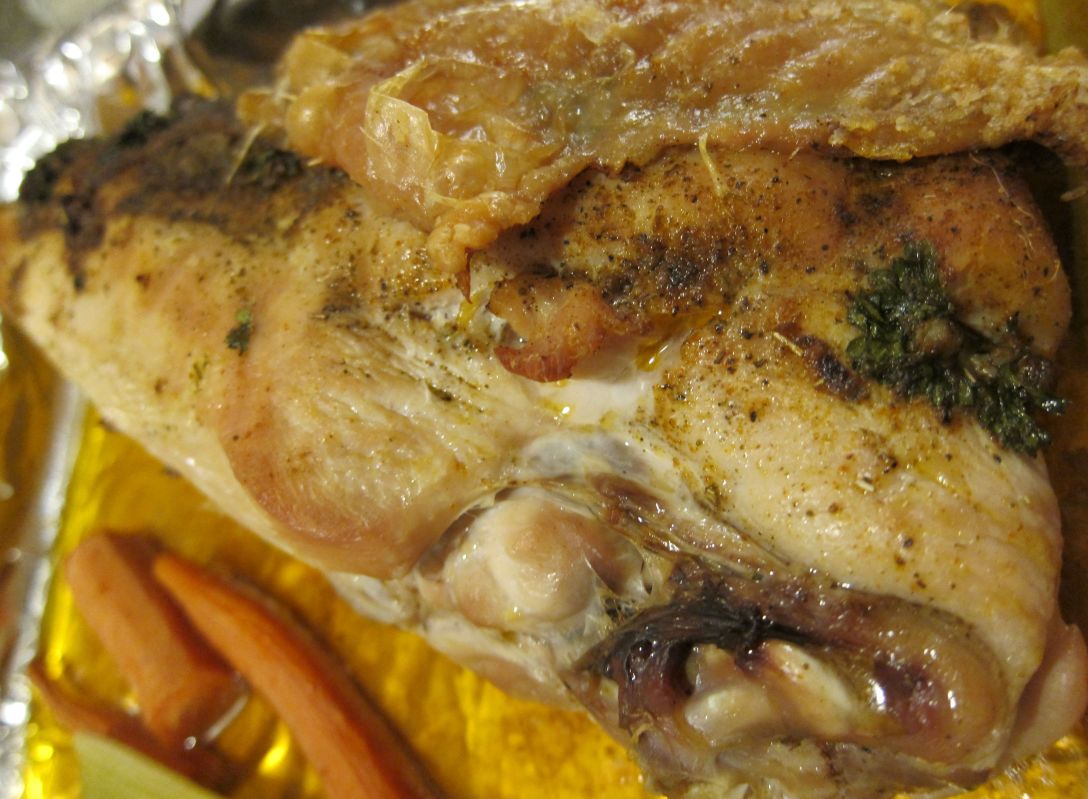
Roasted Turkey Breast with Assorted Vegetables

I know, I know! Leftovers from a US Holiday are part and parcel of American food culture, they’re how we extend the warmth of the holiday into the homes of our family and friends. They’re an indication of friendship and love, because it’s our way of showing care.

When the leftovers are simply for ourselves in a small family, however, I feel that the best way to avoid wasting food is to limit the amount of leftovers to a manageable level. After all, with my allergies, I tend to eat the same foods again and again, which can become too monotonous. (When I’m eating with all my family, though? All bets are off!  Hope you like that gallon of stuffing coming your way!) This turkey breast recipe is something I make when it’s not Thanksgiving but I believe it’s perfectly adaptable to any holiday celebration!

Also, a word about turkeys and brine. I don’t brine things, because I don’t trust store bought mixes. So this is an unbrined kosher turkey breast which came out to about two pounds.

You’ll Need (serves 2 – 4):

1 turkey breast, around two pounds by weight

2 tsps. Thyme

2 tsps. Sage

3-4 cloves roasted garlic, smushed or chopped

2 tsps. Parsley

2 tsps. Paprika

2 – 4 Carrots, chopped into thirds

2 – 4 Celery stalks, chopped into thirds

1 Onion, chopped into chunks

¼ cup Sunflower Oil

Salt and Pepper to taste

If frozen, thaw your turkey breast in the refrigerator, and keep it in there until it’s ready to be put into the oven. The Butterball company is a <a href=”http://great resource for timings and methods!

Preheat your oven to 375F.  Chop up your vegetables, and get out a roasting pan big enough to hold all your ingredients without creating too much space. Cover the pan with aluminum foil for easy cleaning, or leave it open, and use the drippings for gravy later! (NB: I am horrible at gravy. So bad it’s a family joke. Mom handles any and all required gravies in the family, because when I make it, she usually winds up salvaging them anyway)

Put the vegetables and a splash of the sunflower oil first. Then, get out a small bowl and combine all the herbs, spices, garlic, and leftover oil into a gooshy mess. Carefully open up space beneath the skin of your turkey breast, but slowly inserting your hand between the skin and the meat. Then, using that same hand, pour in and smooth out the garlic herb mix you made underneath the skin of the turkey breast. This will help your turkey stay moist, and help keep the skin from burning. Once all the mix has been added, put the turkey breast in amidst the vegetables, and add any leftover oil to the top of the turkey breast (doesn’t have to be much!)

Put the turkey in the oven and decrease the heat to 350F. At two pounds, it should cook for about an hour and a half. Once out, let the meat rest for at least ten minutes before cutting it up and serving.

Hot tip: Does the turkey’s skin look a little strange? For crispier, cleaner skin, rub the turkey breast with kosher salt, and then wash it clean in cold water. Make sure to pat it dry before cooking.

Thanksgiving: Let the Eating Commence

It’s Thanksgiving! Well, in the United States anyway (the Canadians get an early march on us by holding theirs in October). It’s a holiday designed specifically around American food culture, where no one is supposed to walk away hungry, and leftovers are the language of love we all speak. For people like me with allergies, however, a major holiday with lots and lots of food can turn into a minefield of potential tribulation.

Most Thanksgiving meals in the US are handled buffet-style. When I was a child, every year we’d say grace and then line up single-file, clutching our plates, to tread alongside the kitchen counter, scooping up turkey and side dishes before looping through the front room to make it back to the dinner table. When you have food allergies, as much as these are fond memories, they also contain a certain amount of stress. Will someone put the green bean casserole spoon in the wrong bowl? Will someone have ‘helpfully’ added butter to the peas and onions dish? Has an inattentive aunt allowed her Waldorf salad to touch the turkey fork and then not cleaned it off?

Getting right with the holiday meal took a really long time. It started with an honest and frank conversation with my family about what I needed to avoid, and how I needed my food kept away from the food and utensils used by people without my allergy. When I was younger, my mother had to be quite firm on my behalf. Now, if I visit someone else’s home for Thanksgiving I will bring one or two side dishes with me. Fortunately, the potlach aspect of Thanksgiving makes this very easy, and it also helps alleviate the isolating feeling that Eating While Allergic can instill in you when in a group.

If you’re not in charge of holiday preparations (and with a major holiday, younger family probably are not) then don’t be hesitant to go to your grandparent or parents, or your aunt or cousin, and explain your allergy needs. Do you need to bring your own meal completely? Do you want to skip the meal and just eat dessert? What part of Thanksgiving is so important for you that you want to be in charge of it?

For me, I want the full package, which means I tell people what brands I can eat, and what ingredients I can’t have. If I can throw together some vegetable dishes that make everyone happy, then I’ll do so, and gladly. If someone is willing, I’ll make the turkey, too. Part of making a holiday special is putting in the degree of work that makes everyone happy.

Source your food carefully! If you’re going for any kind of turkey, speak to your butcher about the type of meat you’re buying. Is it corn-fed? Do they wash the meat in any kind of solution? Do they butcher in house or get it from elsewhere? I can’t recommend a brand, but these are important questions to ask. Knowing your allergy, means knowing what questions you have to ask to purchase meat and vegetables that are safe for your holiday table!

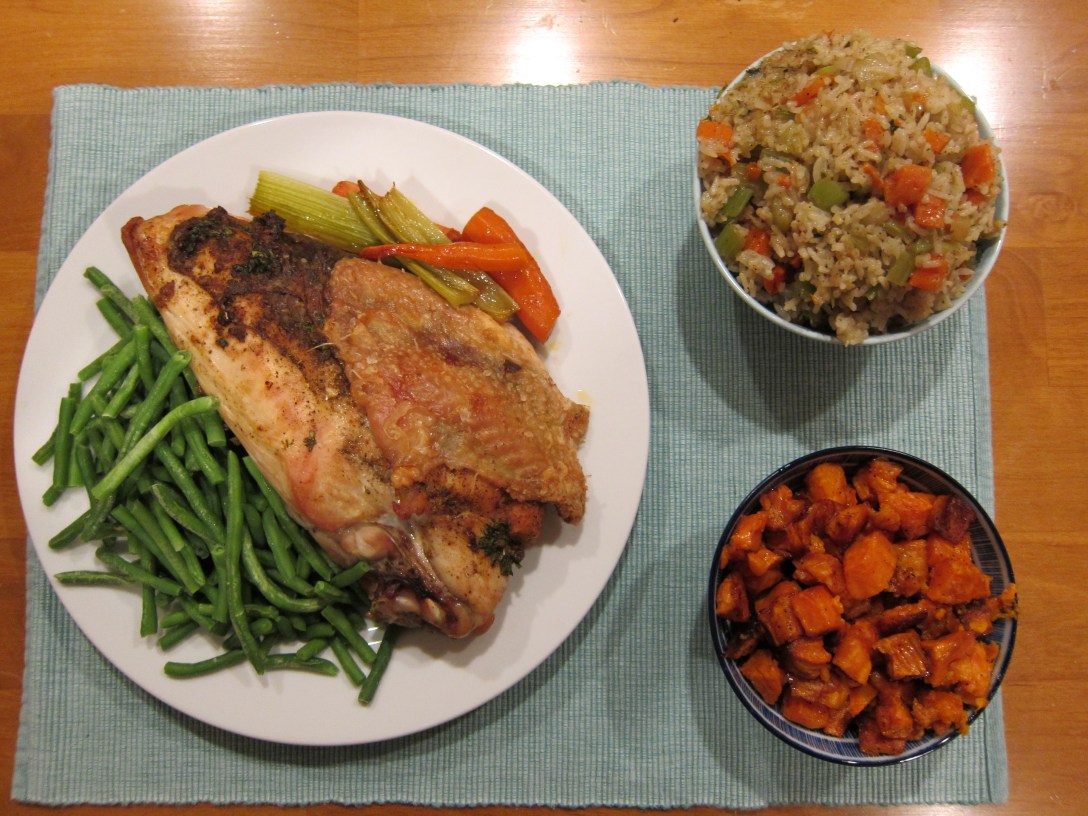
This week, I’ve got a complete savory Thanksgiving meal, which I and my family eat ourselves. It’s got turkey, it’s got a green vegetable, and there’s not too much clean up afterwards. This meal is the basis on which you can begin to build your own Thanksgiving feast, allergy-free and delicious.

Turkey with Roasted Vegetables

Rice Stuffing

Roasted Sweet Potato Bites