First of all, take a deep breath. I’ll do it, too!
There, now we can start. It’s so frustrating seeking an equilibrium between what we want to eat and what we can eat, and some of us have such a restricted diet that it barely seems worth the effort at all. Sometimes, I have texted my friends to remind me to have lunch simply because I was relegated to eating the same piece of bland chicken for every meal, and I was simply done. I was just over the entire experience; I didn’t want to eat anymore, and I certainly didn’t want to eat the same three foods over and over again. I did it anyway, as you can probably guess, but my relationship with food was pretty rocky there for awhile.
It took me a long time to get excited about food again–or at least it felt rather long to me, I love to eat!–But once my body stopped breaking out in hives and those hard bumples that itch and you can’t scratch them, and I started accepting my allergies as a new normal, I realized I needed a new strategy.
Enough with the self-defeat, and onward to the cookies!
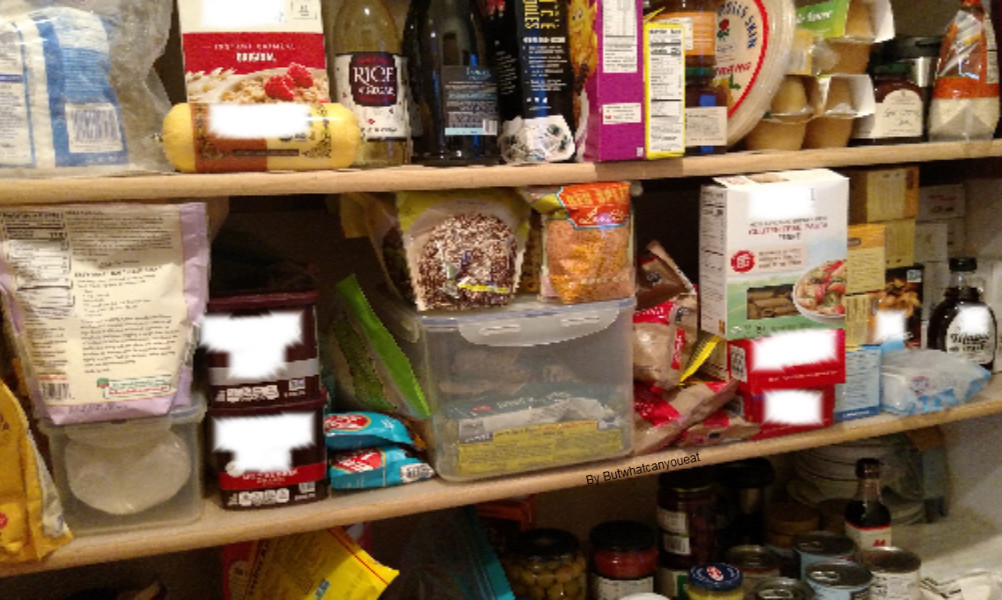
As you can see from my top picture, my pantry is shared, which means there are a lot of items in it that I can’t eat (there’s even polenta! Really not my go to dinner, guys.) That changes what I do when I’m cooking, and when I’m thinking about what to buy. Not merely what I eat, but how it’s stored and what makes my food area as well as my food intake as safe as possible. What helped me start to think creatively about food again is because I decided to keep one thing in mind, and I’m going to share it with you: So Far, So Good.
Keep that phrase in mind, all right? It isn’t trite, and it isn’t meant to make you feel bad about what you’re not eating or what you can’t. The items you put in your pantry are the ones that allow you to eat without having a reaction, that work for you. No matter how restricted your diet: So Far, So Good.
We’re making our food spaces safe for us, in as much as we are able, and that’s no small feat. To help out, here are some steps you can take to begin building your pantry:
- Take stock of all the items in the pantry.
- All of them, from the 1/4 cup of mystery spice blend to the cans to the five pound bag of flour you just bought, because it’s time to put your literacy to the test, and read your labels. You need to know what you’re eating, even down to the hidden ingredients the companies put under more scientific names.
- Pectin, for instance, is often derived from corn. That means I shouldn’t have anything with pectin in it, like jam or jelly. So all those delicious jars automatically belong to other people now!
- Everyone should also pay attention to the “may includes” printed in tiny fonts which I assume they all hope we’ll miss. If you have an allergy, and you see that little line on the back of the almond butter container: “May include…” or “Made in a facility that also processes…” then beware!
- All of them, from the 1/4 cup of mystery spice blend to the cans to the five pound bag of flour you just bought, because it’s time to put your literacy to the test, and read your labels. You need to know what you’re eating, even down to the hidden ingredients the companies put under more scientific names.
- Consider the entire household
- If you live with someone who isn’t allergic to what you’re allergic to, then you have to think about what that means for everyone in the house.
- Is your allergy airborne?
- Can you handle the inevitable cross-contamination in a home kitchen?
- It’s not always as simple as, for instance, making sure you grab the coconut milk creamer rather than the half ‘n half first thing in the morning. While you might get away with segregating items from each other, what does that mean for meals eaten together? If you do most of the cooking, can you cook using items you’re allergic to, or do you need to avoid skin contact?
- If you live with someone who isn’t allergic to what you’re allergic to, then you have to think about what that means for everyone in the house.
- Talk to people
- Ask your doctor, or allergist, or speak with a nutritionist or dietician about maintaining a healthy diet with all the vitamins and minerals you need. Do you have to source supplements?
- Speak with your partner(s) or family members about what you’re going through, and think about what that means for yourself as well. I know it’s stressful, especially if you’re doing this in the middle of an elimination diet, or you’re reacting to something, but you have to come to grips with your food. We’ve all got to eat, and we might as well enjoy the experience.
- Find a blog specific to your allergy!
- Check out an allergy group on social media, or a website and get tips and support for what you need to look out for! No doubt someone can recommend a food item that’s safe for their use and might work for you as well. Building your pantry should be about minimizing risk and maximizing enjoyment.
- Once you feel up to it, grab a box and put every item of food to which you’re now allergic inside of it.
- All that food? If it’s unopened, give it to the nearest food bank. If it’s partially opened, it goes in the trash. Don’t finish something you’re allergic to! I felt tremendous guilt wading through my food and mentally tallying up all the money spent on things I couldn’t eat anymore. But what could I do? I couldn’t just keep eating it. My allergies are part of my new normal, and I had to take control of them by taking control of my food.
- Make a list
- What do you like to eat?
- How can you make it now?
- Let me tell you, realizing I had to give up a majority of Chinese food I didn’t make myself was a hard moment in this blogger’s life. Whither my Kung Pao Chicken? Whither…literally everything? But I did it. And I figured out what I could feasibly make within the parameters of my new life, bounded by my budget as well as my dietary needs.
- Make a list of your favorite foods, including the ingredients.
- Have a breakfast item, a lunch item, and something for dinner. Those foods are what you’re going to base your new pantry on, even if it’s six different ways to eat chicken. You can always add more as you gain confidence, but start small!
No one’s allergy free pantry looks the same, nor should it. Everyone’s allergies and sensitivities are different, and moreover, even those people with the same allergies can have different reactions to an identical product. If you have any concerns about a foodstuff, or you have a severe allergy, please talk over any change in your diet with a medical professional. I can only offer suggestions about foods strategies that work for me, and what works for me might not work for you!
Always play it safe!
That being said, however, if you want an idea of where to start in putting together a pantry of ingredients to pull out, then this is the post for you! Even if you can’t use the brands I mention, you can certainly figure out how to meld my pantry techniques with your food needs.
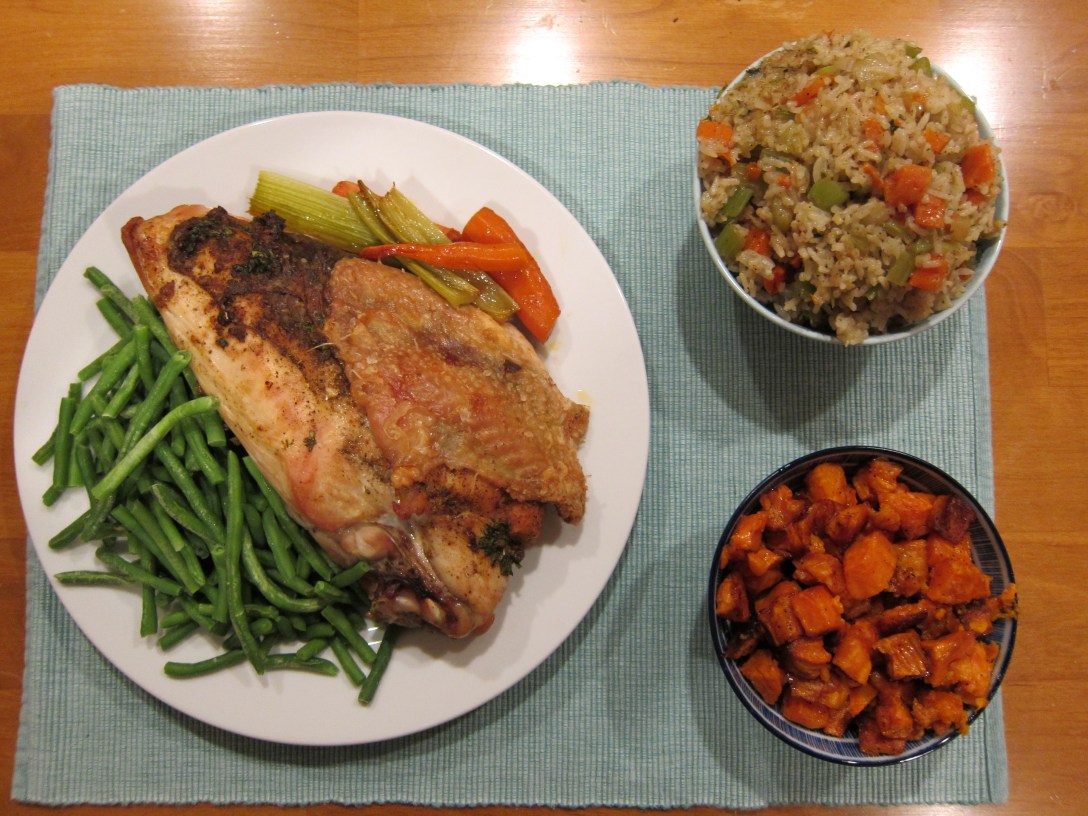


 But What Can You Eat?